Why Learning to Fly in a Flying Club
Dreaming of tasting the sky often starts with imagining flight schools and instructor-led lessons. Many assume the only path to learn to fly is a commercial flight school.
This guide introduces flying clubs as a flexible, community-driven alternative and previews Countrywide Flyers at Orlando Apopka Airport (X04).
Did You Know?
Did you know flying clubs often charge $100–$120/hr for wet aircraft rates versus $150–$175/hr at many flight schools, making clubs a cost-effective way to learn to fly?
Source: AOPA & 2026 industry comparisons
Soon you’ll see how cooperative membership, lower wet rates, and Countrywide Flyers’ Cessna 172 fleet with CFIs make learning to fly in Florida affordable.
Start with a discovery flight at Hangar 39 to feel the difference. Visit CountrywideFlyers.com to schedule today and join now.
What Is a Flying Club?
A flying club is a member-run aviation organization that pools aircraft, maintenance, insurance, and instructional resources so pilots can learn to fly and continue flying at lower cost and with stronger community support. Clubs operate as cooperative, nonprofit, or hybrid entities and prioritize access and shared stewardship over commercial margins.
Organizational models
Member-owned cooperatives give voting control to pilots, with initiation fees (commonly $500–$2,000) and monthly dues to cover hangar, insurance, and parts. Nonprofit clubs focus on access and training rather than profit. Hybrid models lease or jointly own aircraft, balancing administrative structure with flexibility.
Member CFIs and shared resources
About 70% of U.S. flying clubs offer primary instruction using member CFIs, delivering lower instructor rates and mentorship-style training. Clubs use cooperative scheduling systems, shared maintenance contracts, and pooled insurance to produce wet rates typically in the $100–$120/hr range—often ~$93/hr effective for a Cessna 172 per member—versus $150–$175/hr at many flight schools.
Flying Club Snapshot
What a flying club is
A member-run aviation organization that pools resources—aircraft, maintenance, and instruction—to make flying accessible and community-driven.
Organizational models
Member-owned cooperatives, nonprofit clubs, and hybrid ownership models each balance governance, fees, and operational control differently.
Member CFIs & training
Many clubs use member CFIs for primary instruction, lowering instructor rates and offering flexible, mentorship-focused training.
Shared resources in practice
Cooperative scheduling, shared maintenance costs, and pooled insurance reduce hourly costs and increase aircraft availability.
Why pilots choose clubs
Lower wet rates, stronger aviation culture, and long-term access for post-cert flying make clubs ideal for hobbyists and career-minded pilots.
Countrywide Flyers (X04)
A cooperative flying club at Orlando Apopka Airport focused on affordable Orlando flight training, professional maintenance, and community-driven pilot training.
In practice, clubs rely on tools like ForeFlight for planning, ClubSpot or SquadSync for booking, and on-member leadership to set maintenance standards. Common training aircraft include the Cessna 172 and Piper Cherokee; many clubs upgrade with Garmin GNS/GTN or G1000-equipped ships to teach modern avionics skills.
Countrywide Flyers operates at Hangar 39, 1321 Apopka Airport Rd, Apopka, FL 32712 as a cooperative flying club focused on accessibility and professional standards, offering affordable Orlando flight training and a community-centered path to a private pilot license.
Write a 3,500–4,000 word SEO-optimized blog article titled: “Why Learning to Fly in a Flying Club Is Better Than a Traditional Flight School” The article should target people searching for “learn to fly”, “how to become a pilot”, and “pilot training near me.”
Flying Club vs Flight School – Key Differences
Club Advantages at a Glance
Member-owned fleets, lower wet hourly rates, and frequent access make flying clubs the economical choice for ongoing private pilot training and recreational flying.
- ✓ Lower wet hourly rates ($100–$120/hr)
- ✓ Member CFIs and ~30% lower instruction costs
- ✓ Community ownership and shared maintenance
Cost is the single biggest, measurable difference. Wet hourly rates for club-owned aircraft commonly sit in the $165–$185/hr band versus $195–$215/hr at many flight schools. Instruction follows the same pattern: member CFIs in clubs typically charge roughly $75/hr less than commercial school CFIs, producing about a 20–30% saving on lesson time.
Availability and scheduling also diverge. Flying clubs (AOPA estimates ~3,000 nationwide) often allow members to reserve aircraft for longer blocks and more flexibly than flight schools, which balance lessons, discovery flights, and rental revenue. About 70% of clubs report they offer primary instruction via member CFIs; flight schools, meanwhile, generally provide continuous instructor availability and structured Part 141 syllabi when learners want an accelerated, syllabus-driven program.
How the numbers map to real choices
If you plan to fly 2+ hours per month for personal flying after certification, the membership model quickly offsets initiation and dues. Clubs with $500–$2,000 startup costs and lower hourly rates often become cheaper over a training timeline and for post-cert flying. Flight school learners pay higher hourly rates but get predictable scheduling, dedicated ground training, and full-service billing—useful if you’re aiming for a tightly managed private pilot curriculum.
Rental restrictions differ by policy. Clubs may set minimum flight currencies, checkout requirements, and member voting on aircraft use; these rules protect the fleet and reduce surprise charges. Flight schools enforce their own checkouts and hour-minimums but usually support immediate rentals to students and outside pilots at published rates.
| Feature | Countrywide Flyers (Apopka Club) | AOPA Avg Flying Club | Typical Flight School |
|---|---|---|---|
| Wet Hourly Rate (Cessna 172) | $139–$165/hr (club-rate pricing) | $100–$120/hr (AOPA median) | $195–$250/hr |
| Instruction Hourly | Member CFIs often $75/hr less (~$75–$85/hr) | ~30% lower than schools (saves ~$95–$125/hr) | $95 $135/hr (industry avg) |
| Membership / Upfront Fees | $99 initiation + $49 monthly dues | $500–$2,000 typical initiation | No membership; tuition packages ($10k–$15k) |
| Primary Instruction Offered | Yes — member CFIs provide primary training | ~70% of clubs offer primary instruction | Yes (Part 61/141 structured programs) |
| Part 141 Program | Generally informal, Part 61-style | Most clubs are informal, non‑Part 141 | Often Part 141 (structured syllabi) |
Practical impact: if your goal is a private pilot certificate and long-term recreational flying, clubs lower the ongoing cost and increase aircraft access once you’re a member. If you prefer a fast, structured path to the certificate with guaranteed instructor time and formal syllabi, a flight school’s higher hourly rates buy convenience and predictability.
Lower Cost to Learn to Fly
Cooperative operation and shared overhead make flying clubs one of the most affordable routes to a Private Pilot License (PPL). Countrywide Flyers’ Apopka Flying Club and many others leverage member ownership, pooled maintenance, and volunteer scheduling to keep wet rates down to roughly $100–$120/hr for common trainers like the Cessna 172, compared with $150–$175/hr at many flight schools.
Breakdown of Cost Drivers
- Wet aircraft rates: Clubs quote wet rates that bundle fuel and oil—typical club ranges are $100–$120/hr; flight schools commonly charge $150–$175/hr. AOPA and industry surveys show these gaps persist across many fields.
- Instructor hourly fees: Member CFIs in clubs are often $30/hr cheaper than school CFIs. If a school CFI averages $60/hr, a club CFI might be ~$30–$40/hr, adding up to substantial savings across 40–60 training hours.
- Membership vs packaged tuition: Clubs require initiation (commonly $500–$2,000) plus modest dues, but avoid the high packaged tuition that can push flight school PPL costs into the $10,000–$15,000 range for Part 61/141 programs.
- Ongoing access: After the PPL, club retention gives lower per-hour ownership-equivalent rates for currency and cross-country practice—one Cessna 172 example has been cited as an effective $93/hr per member with shared ownership.
Those per-hour and instructor differences translate into real math. Using the midpoints shown above (club aircraft ~$110/hr and club CFI ~$40/hr versus school aircraft ~$162.50/hr and school CFI ~$70/hr), a student flying 50 hours will see a multi-thousand-dollar delta in direct flight and instruction costs alone.
How Clubs Cut Costs
Join the Club
Pay a one-time initiation ($99–$49) and modest monthly dues to unlock low wet rates and shared ownership benefits at Countrywide Flyers.
Book Wet-Rated Aircraft
Fly Cessna 172s at typical club wet rates of $165–$185/hr rather than $195–$215/hr at many schools.
Use Member CFIs
Choose club CFIs for instruction that’s often ~$75/hr cheaper than school CFIs—real savings during primary training.
Continue as a Member
After certification, retain access to affordable aircraft for practice and cross-country flights, keeping long‑term ownership costs down.
For many students the math is decisive: clubs often become more economical after a few hours per month of flying and make the PPL achievable without large tuition packages. AOPA lists roughly 3,000+ U.S. clubs, and about 70% provide primary training with member CFIs, so the route that starts at a hangar like Hangar 39 in Apopka can scale to thousands of pilots nationwide.
Aircraft Availability and Maintenance
One of the most common frustrations for student pilots is booking a flight school aircraft only to find every slot filled for weeks. Traditional flight schools often charge $195–$215/hr and run high utilization on a few airframes, which creates scheduling bottlenecks and slows training progress.
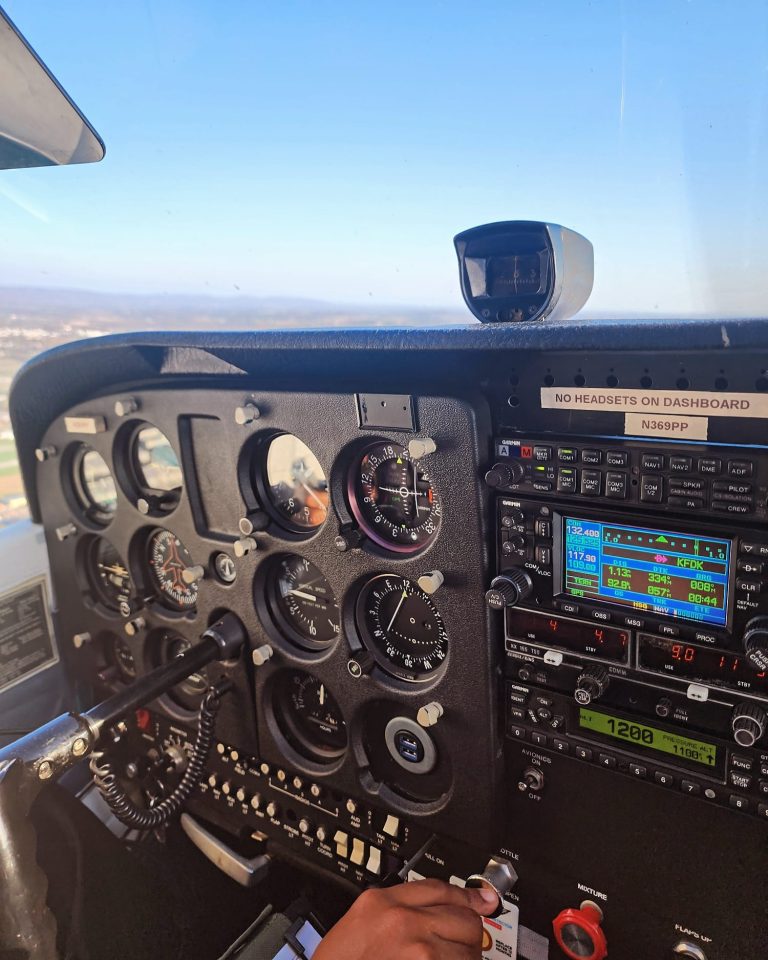
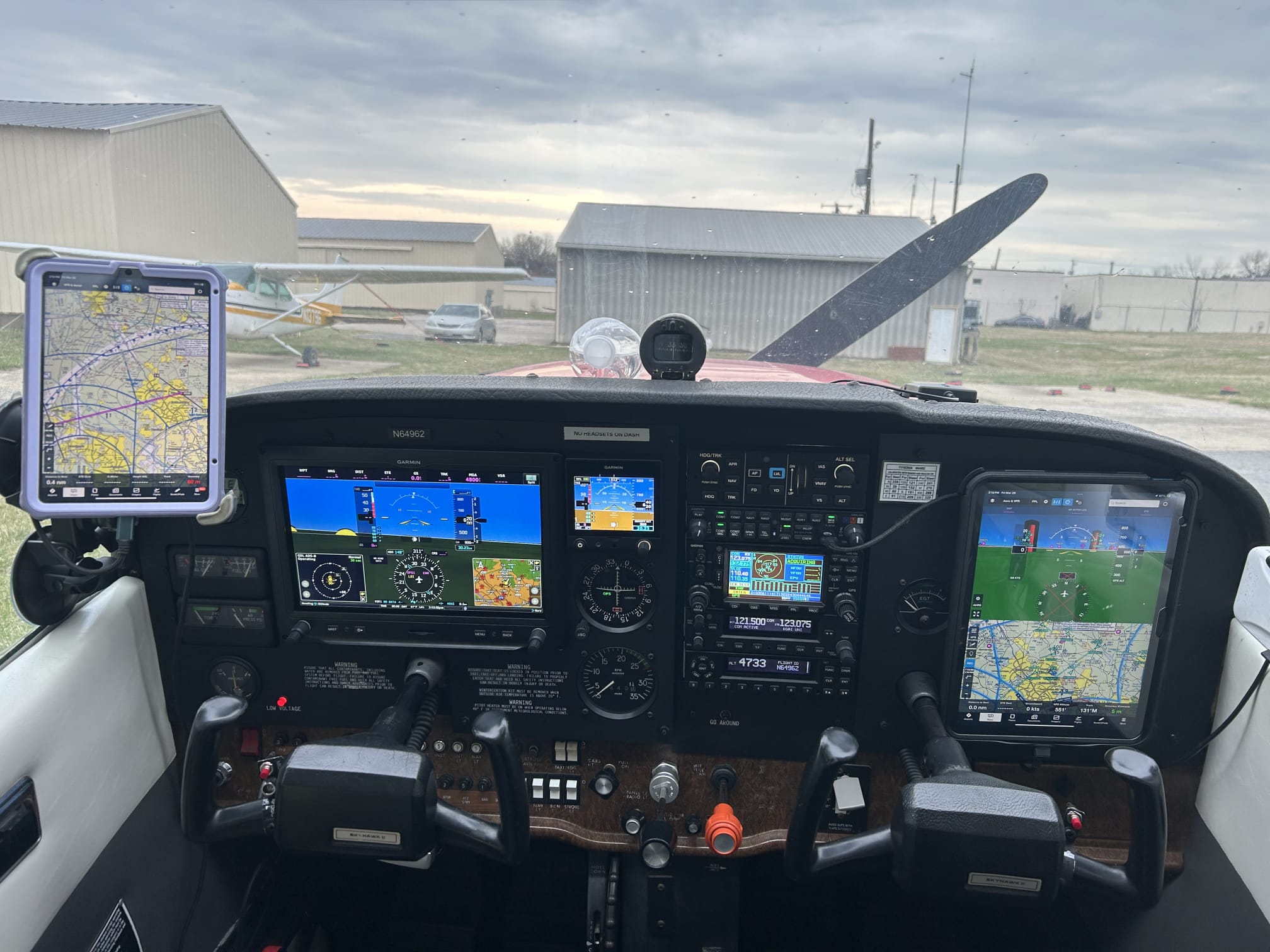
Flying clubs change that dynamic by pooling aircraft across members, keeping hourly rates typically in the $165–$185/hr range, and offering more flexible, member-prioritized scheduling. Countrywide Flyers at Apopka (Hangar 39) expands access with multiple Cessna 172 Skyhawks and an increasing number of glass‑cockpit trainers, so students can move from basic steam gauges to Garmin G1000‑equipped aircraft without long waits.
How Clubs Maximize Availability
Priority Scheduling
Members book through FlightCircle or ClubExpress with tiered priority for recurrent training and cross-country planning.
Shared Fleet Access
Multiple Cessna 172s and a Diamond DA40 in rotation mean more slots and fewer booking conflicts.
Downtime Mitigation
Pre-stocking parts, using Sporty’s maintenance tracking, and coordinated A&P scheduling reduce mean time to return.
Maintenance is the linchpin of both safety and availability. High maintenance standards reduce unscheduled grounding, keep insurance premiums lower, and maintain predictable training timelines. Countrywide Flyers emphasizes FAA‑compliant logs, documented annuals, and recurring preflight checklists so a student’s next lesson isn’t derailed by an overdue inspection.
Clubs are effective because they commit resources differently than a school: bulk parts purchasing from Aircraft Spruce, scheduled maintenance blocks to avoid midweek surprises, and a roster of trusted A&Ps who handle annuals and AD compliance. Countrywide Flyers also stocks common items—spark plugs, oil filters, and replacement avionics connectors—for rapid turnarounds on Cessna 172s and their Garmin installations.
Practical strategies members should expect
- Use FlightCircle or ClubExpress to streamline bookings and give priority to students on a syllabus.
- Choose clubs that run a mixed fleet—Countrywide Flyers’ growing Cessna 172 pool shortens wait times for both dual and solo flights.
- Look for proactive inventory policies: stocked consumables and a relationship with Aircraft Spruce or a local avionics shop speeds repairs.
- Confirm the club uses maintenance tracking tools (Sporty’s or FlightSchedule Pro) and contracts A&Ps for scheduled annuals to prevent surprises.
With roughly 3,000 flying clubs in the U.S. and about 70% offering primary instruction, membership often translates into faster progress and lower long‑term costs. Countrywide Flyers’ combination of glass‑cockpit training, pre‑stocked parts, and structured scheduling demonstrates how clubs turn better maintenance into more available flights for students and hobbyists alike.
A Real Aviation Community
Flying clubs turn solo hours into shared memories. Countrywide Flyers at Hangar 39 (Orlando‑Apopka Airport, X04) builds friendships through clubhouse socials, post‑flight debriefs, and quick coffee briefings before sunrise departures.
Club vs Network: Community & Mentorship
Countrywide Flyers — Hangar 39 (Apopka)
A private flying club based at Orlando-Apopka Airport (X04) that blends membership-based aircraft access with social events, member CFIs, and local mentorship.
- • Hangar 39 location: 1321 Apopka Airport Rd, Apopka, FL 32712
- • Fleet access includes Cessna 172s at club rates ($100–$120/hr)
- • Weekly safety seminars and monthly group flights
- • Member mentorship program pairing students with experienced private/CFI pilots
AOPA Flying Clubs Network
Nationwide network and directory supporting ~3,000 clubs, resources for club governance, safety programs, and connections to member-led instruction.
- • AOPA directory access and club best-practice guides
- • 70% of clubs offer primary instruction via member CFIs
- • Regional events and safety stand-downs
- • Templates for membership dues and maintenance tracking
Mentorship and Member‑Led Instruction
Clubs pair new students with seasoned pilots for regular mentorship: post‑flight critiques, cross‑country coaching, and cockpit resource management discussions. Countrywide Flyers maintains a member mentorship pathway where private pilots and CFIs volunteer time to guide students toward their first solo and checkride.
Member CFIs often charge roughly $75/hr less than school rates, and AOPA data shows about 70% of clubs offer primary instruction through members. That peer model supplements formal lessons with extra PIC time, pattern practice, and real‑world decision‑making exercises.
Social Events, Safety, and Group Flying
Socials at Hangar 39 include potlucks, safety seminars, and simulator nights that turn classroom topics into group discussion. Monthly group flights let students ride along on cross‑country legs, build navigational skills, and observe seasoned pilots managing weather and airspace.
Those gatherings aren’t just social: safety stand‑downs hosted using AOPA templates reinforce risk management and increase retention. Pilots who learn together keep flying together, which lowers long‑term costs and makes advanced ratings more accessible through shared mentorship and club support.
International Flying Opportunities
Important Insight
Countrywide Flyers’ fleet at Apopka (Hangar 39) is equipped and FAA-approved for international trips — including regular flights to the Bahamas — plus hands-on customs and overwater training.
Many Part 61 and Part 141 flight schools limit cross-border flying because of insurance, maintenance, and regulatory overhead. Flying clubs like Countrywide Flyers, however, often permit international trips through member-approved aircraft and club procedures. At Hangar 39 (Orlando‑Apopka Airport, X04), Countrywide Flyers explicitly maintains aircraft with international approvals.
Clearances, Tools, and Equipment
Countrywide Flyers uses ForeFlight and Garmin Pilot for international flight planning, including route filing, weather, and overwater alternates. Aircraft in the fleet—commonly Cessna 172s and similar—are fitted with ADS‑B In/Out, Garmin GTN avionics where applicable, and survival equipment such as ACR ResQLink PLBs and approved life vests.
Customs and Procedures Training
Members learn eAPIS filing, CBP ROAM check‑ins, and Bahamas Customs protocols during club-run briefings and mock clearances. Instructors and experienced members walk students through arrival and departure paperwork, radio calls, and the timelines required for US Customs and Border Protection and Bahamas authorities.
Overwater Preparation
Practical overwater modules cover ditching drills, flotation deployment, weight-and-balance for extended-range tanks, and use of satellite communicators like Garmin inReach. Club CFIs run simulator exercises (ForeFlight flight plan review and emergency scenarios) before any actual water crossing, ensuring safe, staged exposure.
Real‑World Experience
Countrywide Flyers organizes supervised trips to nearby Bahamian islands that let students apply planning, navigation, and customs skills in real conditions. These flights turn textbook lessons into hands-on competency—routing, fuel planning, diversions, and international comms become concrete skills rather than hypotheticals.
Why This Matters for New Pilots
International flying accelerates decision-making and situational awareness. Completing a cleared trip to the Bahamas under a CFI’s guidance builds confidence for cross‑border operations, reinforcing sterile cockpit discipline, meticulous planning with ForeFlight, and emergency readiness with PLBs and life vests.
Club Benefits vs. Flight Schools
Where commercial schools may refuse international legs due to policies or cost, Countrywide Flyers provides lower hourly rates and flexible access so members can practice beyond local patterns. The club model makes overseas training accessible, affordable, and adventurous—ideal for pilots aiming for real-world proficiency.
- Practical skills: eAPIS, CBP ROAM, Bahamas Customs.
- Equipment: Cessna 172s, Garmin GTN, ADS‑B, ACR ResQLink, Garmin inReach.
- Tools: ForeFlight and Garmin Pilot for multi‑leg planning.
Learning to Fly in Florida
Florida’s climate and airspace make it one of the best places to learn to fly. Predictable VFR weather and long flying seasons mean fewer cancelled lessons and steady progress toward a private pilot certificate.
Why Florida Works for Student Pilots
Sunshine & Year-Round Flying
Consistent VFR days and low seasonal downtime—ideal for regular lesson scheduling.
Plenty of Nearby Airports
Dense network around Orlando for frequent cross-country practice and diverse pattern work.
Coastal & Island Practice
Coastal airwork and island hops teach dynamic wind and navigation skills.
Apopka (X04) Advantages
Hangar 39 base—low congestion, efficient departures, and quick access to Orlando Class B.
Club-Based CFIs
Countrywide Flyers combines member CFIs and affordable rates for steady progress.
Cost-Effective Training
Flying club rates (~$100–$120/hr) and lower instructor premiums help stretch training budgets.
Frequent training days are a huge advantage. With fewer weather delays than northern states, student pilots can string lessons together—reducing knowledge decay and lowering total training hours required to reach proficiency.
Airspace Variety & Cross-Country Work
Orlando’s dense airport network and nearby coastal strips give learners exposure to controlled and uncontrolled fields, towered operations, and Class B transitions. Cross-country hops to coastal airports or small islands sharpen navigation with real-world wind and diversion practice.
Why X04 (Orlando Apopka) Works
Orlando Apopka Airport (X04) and Hangar 39 are tailored for efficient club operations. Low congestion, quick taxi times, and direct access to Orlando Class B make departures smoother than busier training hubs.
Countrywide Flyers leverages Cessna 172s in a mixed fleet and member CFIs to deliver structured Part 61 training with club pricing. With ~3,000+ clubs nationwide and ~70% offering primary instruction, the club pathway balances affordability and quality instruction for private pilot students.
Pathways in Florida include Club-based Part 61 training at Countrywide Flyers or formal Part 141 programs nearby for students seeking accelerated syllabi. Both routes capitalize on Florida’s flying environment to get you airborne efficiently.
Why Countrywide Flyers Is One of the Best Places to Learn to Fly
Countrywide Flyers at Hangar 39, Apopka Airport (X04) positions itself as a modern aviation community rather than just a flight school. The club’s emphasis on affordable, practical training and retention for post-cert flying makes it ideal for Orlando flight training and private pilot training Florida candidates.
Countrywide Flyers Quick-Check
✓
Growing fleet with Cessna 172 and Cessna 182 availability
✓
Glass-cockpit options (Garmin G1000 / Garmin G5 retrofits) for modern IFR training
✓
Professional CFIs and CFII instructors on staff and member CFIs for mentorship
✓
Structured yet flexible Part 61 training pathways and custom syllabi
✓
Strong maintenance program with A&P mechanics and proactive parts inventory
✓
Safety-first culture: SOPs, regular safety meetings, and SMS practices
✓
Cooperative membership model with affordable hourly rates ($100–$120/hr wet)
✓
Instruction pricing typically lower than flight schools; savings for ongoing pilots-
Active community: mentorship, social events, and international trips (Bahamas)
✓
Convenient Orlando location — Hangar 39, Apopka Airport (X04) for local training
Fleet & avionics
Countrywide’s fleet emphasizes Cessna workhorses—Cessna 172s and Cessna 182s—plus glass-cockpit options with Garmin G1000 panels and Garmin G5 retrofits. That mix supports foundational stick-and-rudder training and modern IFR instrument lessons without forcing students into expensive rentals.
Training & instructors
Certified CFIs and CFII instructors provide structured Part 61 pathways with customizable syllabi, logbook milestones, and cross-country packages. Member CFIs lower hourly instruction costs versus commercial schools, helping students balance structure with flexibility.
Maintenance, safety & ops
A dedicated A&P team and a proactive parts inventory minimize AOG downtime and keep aircraft available for lesson scheduling. Regular safety meetings, SOP checklists, and a safety-management culture prioritize go/no-go decisions and conservative training norms.
Membership, cost & community
The cooperative membership model reduces per-hour wet rates to roughly $165–$185/hr versus $195–$215/hr at many flight schools. Social events, mentorship pairings, and club trips—including organized hops toward the Bahamas—turn training into an ongoing pilot community experience.
Location advantages
Based at Apopka (X04), Countrywide Flyers supports Orlando-area students with convenient access, lower overhead than downtown schools, and plenty of local cross-country options—making it a smart choice for private pilot training in Florida.