Complete Guide to Learning to Fly in Florida (2026)
The dream of flight is universal, and learning to fly is more within reach than most people imagine. Skilled instructors, clear FAA milestones, and modern training resources make the private pilot license an achievable goal for beginners who commit to regular lessons.
Florida’s year‑round VFR weather, flat terrain, dense airport network, and varied airspace create an ideal training environment. Central Florida—especially Orlando and Orlando Apopka Airport (X04)—serves as a major hub for pilot training Florida and discovery flight Florida experiences, with easy access to island flying like the Bahamas.
Did You Know?
Did you know Florida’s year‑round VFR weather and dense airport network help many students finish the Private Pilot License in about 50–60 hours, with typical Florida PPL costs around $8,300–$15,400 (Cirrus programs higher)?
Source: FlightCents; FLY8MA; Modern Aero (2026)
This guide shows how to learn to fly in Florida step‑by‑step: discovery flights, student pilot certificates, ground school, flight lessons, solo and cross‑country training, and the checkride for your private pilot license Florida.
Expect realistic cost and timeline guidance, comparisons of flying club vs flight school, and practical tips for pilot training Florida. Learn how Countrywide Flyers, a modern flying club at Orlando Apopka (X04), supports affordable flight training, reliable aircraft availability, and mentorship for anyone wondering how to become a pilot.
Follow the sections that follow to plan a discovery flight, compare training options, and begin meaningful flight training Orlando with confidence.
Why Florida Is the Best Place in America to Learn to Fly
The Complete Guide to Learning to Fly in Florida (2026 Edition) shows how to use Florida’s unique environment to accelerate pilot training. If you want to learn to fly, Florida offers consistent weather, varied airspace, and easy access to island flying that shortens training timelines and builds solid skills.
Start by planning training windows around Florida’s frequent VFR days. Year‑round flying weather means fewer weather holds and faster progression toward a private pilot license Florida, whether training in a Cessna 172 or a Cirrus SR20 with Garmin avionics.
Why Train in Florida?
Year‑Round Flying Weather
Long training windows with frequent VFR days reduce delays and accelerate progress toward a private pilot license.
Flat, Predictable Terrain
Low elevation and gentle terrain simplify first cross‑country flights and emergency procedures practice.
Dense Airport Network
Abundant airports and uncontrolled fields around Orlando provide more practice options and realistic traffic patterns.
Diverse Airspace
Training across Class B, C, D, E, and uncontrolled areas builds real‑world competency for airspace navigation and ATC communication.
Island & Overwater Access
Proximity to the Bahamas and Florida Keys enables step‑up training in overwater planning, seaplane awareness, and international procedures.
Use Florida’s flat terrain to build confidence for first cross‑country flights: choose routes with multiple nearby fields so you can practice diversions and emergency planning. Training near Orlando exposes you to controlled towers and busy pattern work, which improves radio discipline and situational awareness.
Train in varied airspace deliberately: begin at uncontrolled fields, move to Class D and Class C at airports like Orlando Executive, and then practice Class B transitions near Tampa or Miami when ready. That progression accelerates a student pilot’s comfort with ATC and improves readiness for the checkride.
Island and overwater flying options make Florida ideal for advancing beyond the PPL. Plan a Bahamas flying trip from Orlando Apopka Airport (X04) with Countrywide Flyers to gain experience in international flight planning, customs procedures, and overwater safety—skills many flight schools don’t routinely offer.
Finally, leverage local resources. Search for flight training Orlando programs that use ForeFlight, Garmin G1000, and instructor mentorship. Consider joining a flying club: Countrywide Flyers at Orlando Apopka (X04) combines affordable flight training, modern avionics-equipped aircraft, and a community model that keeps aircraft available and maintenance proactive.
What It Takes to Become a Pilot in Florida
Essentials to Become a Pilot in Florida
Age, medical, language, and ID rules you must meet before starting lessons. Florida-friendly training averages 50–60 hours; options include traditional third-class medical or BasicMed.
- ✓ Age: 17 for Private Pilot (16 for solo glider/balloon)
- ✓ Medical: FAA Third-Class or BasicMed alternative
- ✓ English proficiency & aeronautical knowledge
- ✓ TSA/ID rules for non-citizens and certain certificates
- ✓ Typical Florida training: 50–60 hours, Cirrus SR20 G6 programs available
Age requirements
The FAA sets the minimum age for a Private Pilot License at 17. You can begin lessons and accumulate flight time earlier, and soloing rules allow younger limits for gliders and balloons (often around 16), so plan ground school and dual instruction well in advance.
Medical certification
Most students obtain an FAA Third-Class medical from an Aviation Medical Examiner (AME) before solo. An alternative is BasicMed, which allows certain pilots to fly without a current FAA medical if they meet the BasicMed checklist, complete the online medical education course, and receive a state-licensed physician exam.
Choose based on training needs: Part 61 schools like FLY8MA commonly guide students to the Third-Class, while Cirrus programs such as Modern Aero discuss BasicMed options for experienced drivers transitioning into advanced programs like the Cirrus SR20 G6.
English proficiency and knowledge
FAA regulations require pilots to read, speak, write, and understand English. Expect aeronautical knowledge checks: FAA written test topics, practical test standards, and AOPA study materials are commonly used to prepare for the knowledge and oral portions of the checkride.
TSA and identification
Non-citizen applicants and certain certificate seekers must satisfy TSA vetting and provide immigration documents or a REAL ID-compliant form of identification. Flight schools may request additional background checks before beginning training.
Who can learn to fly
Nearly anyone in generally good health with dedication and time can become a pilot. Consistent practice at Florida airports, using resources like FlightCents price benchmarking or regional schools, will keep you on track toward that Private Pilot certificate.
Step-by-Step Process to Earn a Private Pilot License
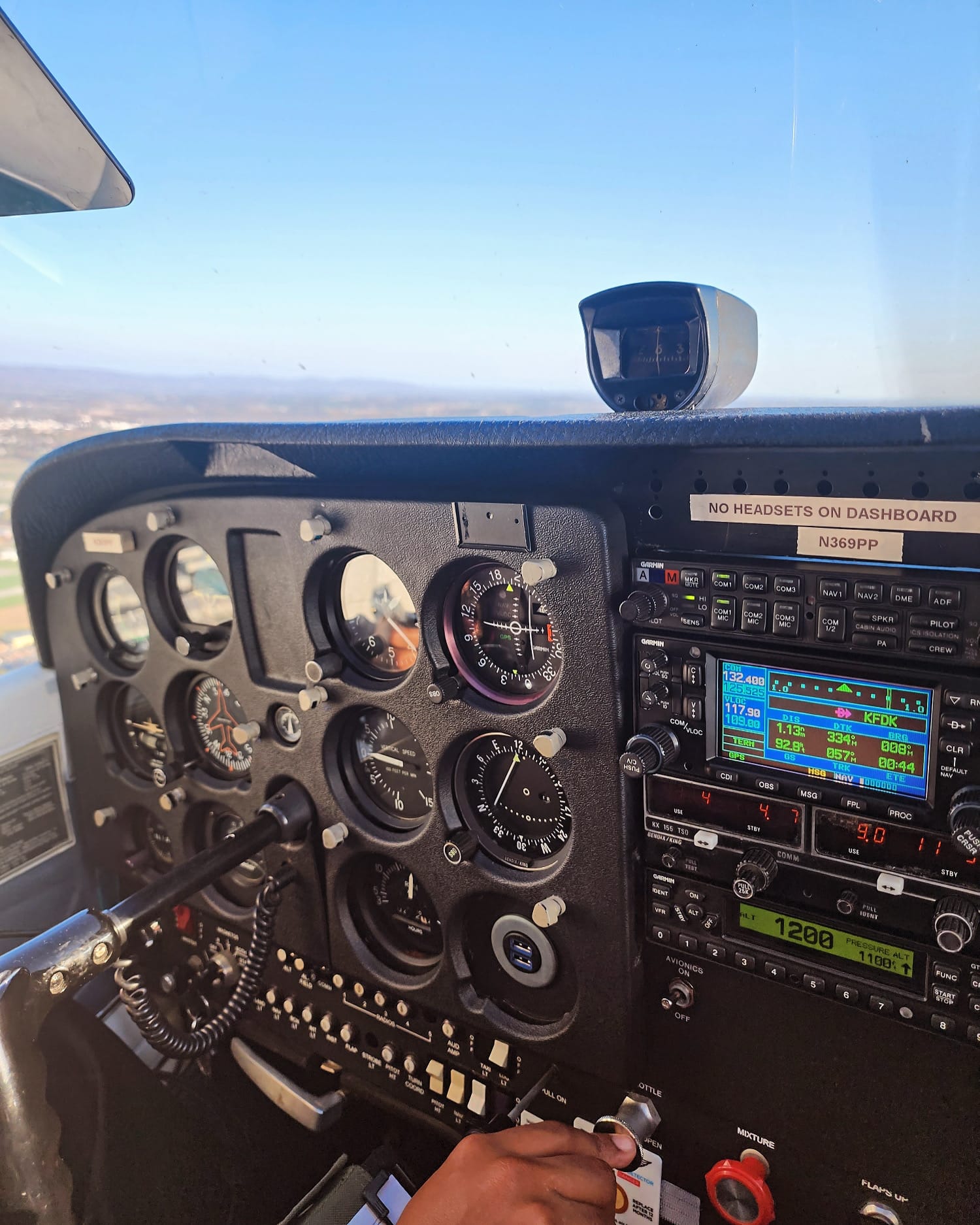
Start by setting clear goals and booking a discovery flight—often advertised as a discovery flight Florida. Schedule a 30–60 minute flight in a Cessna 172 or Piper Archer to sit in the left seat, feel the controls, and decide if you want to commit to training.
Quick Steps
Discovery Flight
Hands-on intro in the left seat with a Cessna 172 or Piper Archer — basic controls and a short flight to confirm interest.
Get a Student Pilot Certificate
Register with IACRA, obtain FAA student certificate and third-class medical (or BasicMed where applicable) to begin solo training.
Ground School & Written Prep
Study FARs, weather, airspace, aerodynamics using King Schools, Gleim, or Sporty’s; take the FAA written exam.
Dual Flight Lessons
Progressive instruction covering takeoffs, landings, stalls, navigation, and emergency maneuvers with instructors from ATP Flight School or local FBOs.
First Solo
Instructor signs you off after demonstrated proficiency; practice pattern work to build confidence and hours.
Cross-Country Training
Plan and fly navigation trips, file flight plans, and complete VFR cross-country requirements — includes night cross-country if desired.
Checkride
Prepare for the oral exam and practical with an FAA-designated examiner; use ASA Private Pilot Prep and sample ACS scenarios.
Get Your Student Pilot Certificate and Medical
Register in IACRA and follow FAA instructions to receive your student pilot certificate. Schedule a third-class medical exam with an AME, or confirm eligibility for BasicMed if you prefer that pathway.
Ground School and Written Test
Enroll in King Schools, Sporty’s, or Gleim for structured ground school. Focus study on FAR/AIM, weather, aerodynamics, navigation, and human factors; use ASA Private Pilot Prep question banks for written-test practice.
Flight Lessons: Dual Instruction to Solo
Start dual instruction with a Part 61 or Part 141 provider such as ATP Flight School, Modern Aero, or a local FBO. Train on maneuvers, emergency procedures, stalls, and crosswind landings in a Cessna 172 or similar trainer.
First Solo and Building Hours
When your instructor is confident, they will endorse you for solo. Use solo sessions to consolidate traffic-pattern work and build confidence; log hours accurately and review each flight with your instructor.
Cross-Country and Night Endorsements
Plan and file cross-country flights, practice navigation with pilotage and dead reckoning, and complete VFR cross-country requirements. If you want night privileges, arrange night training and obtain the required night XC endorsements.
Checkride Preparation
Run mock oral exams and practice ACS tasks using ASA Private Pilot Prep and Jeppesen scenarios. On test day you’ll meet an FAA-designated examiner for an oral exam followed by a practical flight test.
Typical FAA Minima vs Florida Reality
FAA minimum flight time is 40 hours, but Florida students commonly average 50–60 hours due to proficiency and additional practice. Refer to the chart below for a quick comparison of typical hours.
How Much It Costs and How Long It Takes to Learn to Fly in Florida
Expect to budget broadly: Private Pilot License (PPL) programs in Florida commonly run between $8,300–$15,400, while Cirrus-based programs (Modern Aero Cirrus SR20 G6) commonly exceed $26,700. Those ranges reflect aircraft hourly rates, instructor time, and program-specific premiums.
Quick Steps to Control Cost & Time
Estimate Your Budget
Build a $8,300–$15,400 baseline, or $26,700+ if choosing a Cirrus SR20 program; include headset, medical, written, and checkride fees.
Pick Aircraft Type
Choose a Cessna/PA-28 for lower hourly rates or a Cirrus SR20 if you need advanced avionics—expect higher rental and instructor costs.
Schedule Regular Flights
Aim for 2–3 lessons per week to finish in 3–6 months; less frequent training stretches costs and flight hours to 50–60.
Use Flying Clubs or Rentals
Join a flying club or use shared ownership at airports like KORL to lower aircraft hourly rates and reduce total cost.
Plan for Extras
Budget for extras: headset ($250–$1,250), medical ($125), written ($175), checkride ($650) and any Cirrus transition fees.
Typical Cost Breakdown
Break your budget into aircraft rental, instructor time, ground school, exam fees, and extras. Aircraft rental typically dominates the bill—hourly rates differ between basic trainers and Cirrus SR20s.
Examples from 2026: FLY8MA lists $8,300–$12,300 for a Part 61 path; Paragon shows $8,000–$15,000 depending on location and hours; Modern Aero’s Cirrus SR20 program begins around $26,700+ because of higher aircraft and avionics costs.
Average Hours and Realistic Timeline
Florida students typically log 50–60 hours before achieving true proficiency, which exceeds the FAA’s 40-hour minimum. Good weather in Florida often speeds progress, but realistic completion averages are higher than the minimums.
Timeline scenarios: aggressive students training 2–3 times per week often finish in 3–6 months. Casual students flying weekly or less commonly take 6–12 months. Consistency matters more than raw speed for reducing total hours.
How to Reduce Cost and Time
Choose frequent, scheduled lessons to retain skills and avoid repeat training. Use flying clubs or shared ownership to lower hourly aircraft costs. Select a basic trainer (Cessna/PA‑28) for lower rental rates unless you specifically need Cirrus avionics.
Budget for extras and verify what each program includes. Use the comparison table below to match offerings and costs to your priorities.
Program Comparison
| Feature | FLY8MA (Part 61) | Paragon Flight Training (FL) | Modern Aero (Cirrus SR20 G6) |
|---|---|---|---|
| Estimated Cost | $8,300–$12,300 | $8,000–$15,000 | $26,700+ |
| Typical Flight Hours | 40 hours (advertised) | 60 hours (real-world average) | 50 hours (Cirrus-focused) |
| Included Items | 40 hrs aircraft rental; ground school; written/checkride fees | Aircraft & instructor vary; ground school sometimes included | 50 hrs aircraft; Cirrus transition program; avionics training |
| Extras & Fees | Medical $125; headset $250–$1,250; checkride $650 | Exam & materials vary by location; possible higher hours | Cirrus program fee $1,200; higher hourly aircraft rate |
| Why Price Varies | Aircraft hourly rate, instructor rate, location | Aircraft type, instructor availability, local demand | Cirrus avionics, specialized training, aircraft hourly premiums |
Flying Club vs Flight School — Which Is Right for You?
Decide by matching your goals, budget, and schedule. Flight schools provide structured curricula, standardized syllabi, and predictable instructor oversight. Flying clubs offer cooperative ownership, lower hourly operating costs, and a community-driven approach to flying.
Club vs School Snapshot
Countrywide Flyers (Flying Club)
A member-run cooperative based at Orlando Apopka (X04). Emphasizes shared ownership, lower hourly costs, and community mentorship for cross-country and Bahamas trips.
- • Lower hourly rates via shared ownership and fuel pooling
- • Stronger aircraft access—members schedule direct without commercial bottlenecks
- • Mentorship, social events, and real-world flying opportunities
Modern Aero (Flight School — Cirrus SR20 G6)
A structured Cirrus program offering professional-grade training with a defined 50-hour curriculum and dedicated Cirrus G6 systems instruction.
- • Structured syllabus and career-focused training path
- • Cirrus SR20 G6 with modern avionics and higher hourly rates
- • Fixed program fees (Cirrus program fee $1,200) and higher total PPL cost
What to expect from flight schools
Flight schools like Modern Aero follow a defined curriculum and often advertise a targeted hour count (Modern Aero lists ~50 hours for its Cirrus program). Expect higher per‑hour aircraft and instructor costs and extra fixed fees for specialized programs. The upside is consistent instructor availability when schedules align and access to sophisticated avionics for IFR and professional pathways.
Common frustrations include aircraft downtime, maintenance delays, and instructor shortages that create scheduling bottlenecks. Those factors can push a Florida student’s real total above advertised pricing—FlightCents reports typical true costs can be ~40% higher than advertised averages.
Why flying clubs are rising in popularity
Clubs such as Countrywide Flyers reduce hourly operating costs through shared ownership, pooled fuel, and member maintenance oversight. Members report better aircraft access because scheduling is internal and less subject to commercial training demand.
Clubs also deliver mentorship from experienced pilots, more opportunities for real‑world flights (overnights, Bahamas runs), and a social safety net that helps students build hours. For many, the tradeoff is less formal structure in exchange for flexibility and lower long‑term costs.
How to evaluate both — a practical checklist
- Compare per‑hour rental + instructor rates and include fixed fees (eg. Modern Aero’s Cirrus program fees).
- Check availability: boot out scheduling conflicts by asking for sample weekly schedules and downtime records.
- Ask about maintenance standards and mean time between maintenance events; inspect logbooks when possible.
- Evaluate instructor quality: ask for instructor turnover rates, IFR/CFI hours, and checkride pass rates.
- Confirm long‑term access: if you plan Bahamas or cross‑country flights, verify ferry/ferry insurance policies and club approval processes.
Flying Club vs Flight School — Provider Comparison
| Feature | FLY8MA (Part 61) | Modern Aero (Cirrus SR20 G6) | Paragon Flight |
|---|---|---|---|
| Estimated PPL Cost | $8,300–$12,300 | $26,700+ | $8,000–$15,000 |
| Typical Aircraft | Part 61 fleet (Cessna 172 / Piper PA‑28 common) | Cirrus SR20 G6 (high‑end trainer) | Mixed fleet (Cessna 172, Piper Cherokee) |
| Avg Hours to PPL | 40–60 (Florida average ~50) | ~50 (program estimates 50 hours) | 50–60 (varies by location) |
| Program Structure | Flexible Part 61 — self‑paced, pay‑as‑you‑go | Structured Cirrus program, fixed curriculum, program fees | Varies — Part 61 and Part 141 options available |
| Ideal Student | Budget‑minded, flexible schedule, independent learners | Students seeking modern avionics, professional track, IFR training | Local students seeking variety and mid‑range pricing |
Countrywide Flyers — A Modern Flying Club at Orlando Apopka (X04)
Important Insight
Countrywide Flyers at X04 delivers reliable aircraft availability, pro maintenance, and Bahamas-capable training—perfect for affordable, real-world PPL experience.
Overview: Countrywide Flyers operates from Orlando Apopka (X04) as a member-focused flying club offering structured PPL training and flexible rental access. Use ForeFlight or Garmin Pilot for planning club flights and LogTen Pro to upload endorsements and track hours for FAA records. Expect a cost advantage: Florida PPL programs typically range $8,300–$15,400, and the club model helps keep individual student expenses toward the lower end.
Philosophy and Community
Countrywide emphasizes mentorship and peer learning: senior members mentor primary students during ground lessons and cross-country preparation. Join fly-outs and safety evenings where instructors review ForeFlight briefings, eAPIS procedures, and cross-country logs using LogTen Pro.
How to use the community: request a mentor in the club portal, book a safety debrief with a CFI after solos, and attend maintenance walk-throughs to learn preflight inspection techniques used by the maintenance team.
Fleet and Avionics
The fleet focuses on Cessna-type trainers—Cessna 172 Skyhawk and Cessna 182 variants—with a mix of analog and glass panels for a progressive training path. Many aircraft feature Garmin G5 attitude indicators, Aspen Evolution backups, and at least one Cessna equipped with a Garmin G1000 NXi for complex-instrument and cross-border practice.
How to progress: start in a Cessna 172 with a Garmin G5, then transition to a G1000-equipped ship for instrument approaches and international nav planning using Garmin GTN 750 procedures. Use a club-supplied Jeppesen charts subscription or ForeFlight charts during planning.
Maintenance Standard
Countrywide runs proactive maintenance with Flightdocs/CAMP-style tracking, a stocked parts inventory, and contracted A&P mechanics for quick turnarounds. The club prioritizes minimizing downtime so students complete their 50–60 hour average PPL timeline without long grounded periods common at some schools.
How to interact: report squawks via the club’s maintenance portal immediately after flight; follow the club’s phased checkout so instructors can authorize alternate aircraft without delaying lesson plans.
International Capability and Bahamas Training
Several club aircraft are outfitted and approved for international/Bahamas ops—liferafts, ELTs, and long-range tanks where required. Students receive hands-on training in overwater safety, eAPIS filing, Bahamas customs/immigration basics, and route planning with ForeFlight’s Gulf of Mexico overlays.
How to gain experience: request international cross-country sign-offs, practice eAPIS submissions in a simulator session, and fly supervised trips to Bimini or Grand Bahama for customs practice under instructor supervision.
Why Countrywide Flyers Is One of the Best Places to Learn in Florida
Reliable aircraft availability, professional maintenance, and a supportive mentorship network reduce delays and stress—key factors that keep students on-schedule and within typical Florida cost ranges. The club’s emphasis on glass-panel transition, ForeFlight planning, and real-world Bahamas trips provides practical cross-border experience beyond basic PPL syllabi.
How to get started: schedule a discovery flight at X04, request a mentor, and review the club’s checkout matrix for the Garmin G1000 and Cessna 172 to match aircraft to lesson goals.
Discovery Flights, Social Life, and How to Start at Countrywide Flyers
Book a discovery flight to confirm whether flying excites you. Countrywide Flyers typically offers discovery flights in a Cessna 172, Piper Archer, or Cirrus SR20 G6. Expect a 60–90 minute session: ground briefing, cockpit familiarization, and hands‑on time in the left seat under a certified flight instructor (CFI).
Left‑Seat Hands‑On
You’ll sit in the left seat and get guided control under a CFI in a Cessna 172 or Cirrus SR20.
Book & Time
Reserve online or call Countrywide Flyers; plan 60–90 minutes including briefing and short cross‑country demo.
What to Bring
Government ID, sunglasses, a notebook, and your ForeFlight login if you use the app; no medical needed for a discovery flight.
Recommended Gear
Try Bose A20 or Lightspeed Zulu headsets. Countrywide often rents headsets for discovery flights.
Social & Mentoring
Join Countrywide meetups, EAA Chapter events, and peer mentorship for ride‑alongs and study groups.
First‑Year Targets
Local legs to the Keys, Gulf Coast hops, training sorties, and intro Bahamas trips for advanced or tailwheel students.
What to expect on a discovery flight
The CFI will brief airspace, basic instruments, and safety before you taxi. You’ll sit in the left seat and be given control for straight‑and‑level flight, turns, and perhaps a basic approach under supervision.
CFIs at Countrywide use both traditional gauges and Garmin G1000 avionics for demonstrations. Listen closely and ask for a second take if a maneuver feels rushed.
How to book and prepare at Countrywide Flyers
Reserve via Countrywide Flyers’ online scheduler or call the front desk. Confirm aircraft type (Cessna 172, Piper Archer, or Cirrus SR20) so you know cockpit layout beforehand.
- Bring government ID and comfortable clothing.
- Download ForeFlight or have paper charts if you want to follow navigation.
- Plan a 60–90 minute window and arrive 15 minutes early.
Social life, mentoring, and typical first‑year experiences
Countrywide runs weekly socials, EAA Chapter meetups, and group fly‑outs. Mentorship pairs connect students with CFIs and advanced owners for cross‑country mentorship flights to Marathon, Naples, or the Gulf Coast.
Advanced students often join Bahamas introductions (Bimini or Grand Bahama) once they have night and cross‑country endorsements and experience in complex aircraft.
Practical tips to accelerate learning
- Consistent scheduling: lock two lessons per week when possible.
- Use X‑Plane or Microsoft Flight Simulator for procedural practice; pair sim time with ASA or Sheppard Air study for the written exam.
- Leverage peer mentorship: study groups, ride‑alongs, and Hobbs‑share flights speed progress and lower cost per hour.
How Long It Takes and Why Now Is the Best Time to Learn to Fly
Set a clear timeline before you start: an intensive program can get you to a Private Pilot License (PPL) in about 3–6 months, while casual students generally finish in 6–12 months. Plan for 50–60 flight hours on average—Florida students typically exceed the FAA’s 40-hour minimum to reach real-world proficiency.
-
Target timeline: Intensive — 3–6 months; Casual — 6–12 months
-
Flight hours goal: plan for 50–60 hours, not just FAA 40-hour minimum
-
Book regular lessons: 3–5 flights/week for intensive progress
-
Choose aircraft access: flying club (e.g., Countrywide Flyers) or school fleet
-
Check avionics exposure: Garmin G1000 NXi, Cirrus Perspective, ForeFlight practice
-
Confirm instructor consistency and signed syllabus
-
Prepare ground study: Sporty’s PPL course or King Schools materials
-
Budget: $8,300–$15,400 typical; Cirrus programs $26,700+
-
Weather buffer: plan extra lessons for low-visibility or hurricane season
-
Progress review: schedule mock checkrides at 30–40 hours
Factors that speed progress
Book frequent lessons: 3–5 flights per week keeps skills sharp and cuts total months. Secure consistent aircraft access—flying clubs like Countrywide Flyers reduce downtime compared to single-school fleets. Use modern tools: ForeFlight for nav practice and Sporty’s or King Schools for ground study.
Factors that slow progress
Weather interruptions, instructor turnover, and limited aircraft availability add weeks or months. Hurricane season in Florida can create multi-week gaps. Expect higher hour totals if you train on complex platforms like the Cirrus SR20 G6 without a steady instructor track.
Why now is ideal
Pilot demand is rising and avionics/safety tech—Garmin G1000 NXi, Cirrus Perspective, CAPS parachute systems—make training safer and more relevant. More flying clubs and community programs offer lower-hour-rate access and trip-based experience. Countrywide Flyers, for example, gives members better aircraft access, community-based mentoring, and organized cross-border trips that accelerate real-world proficiency.
Budget with realistic figures: FLY8MA and Paragon Flight list $8,300–$15,400 typical; FlightCents averages $15,400; Modern Aero’s Cirrus programs start around $26,700. Use the checklist above to plan scheduling, avionics exposure, and mock checkrides so you hit your timeline efficiently.
Frequently Asked Questions
Use these practical answers to plan training, budget, and next steps. Below are focused how-to tips tied to Florida options like FLY8MA, Modern Aero, Paragon Flight, FlightCents data, and Countrywide Flyers.
FAQ Accordion
How much does a Private Pilot License realistically cost in Florida?
▼
How long will it take to complete a PPL in Florida?
▼
Flying club vs flight school — which is cheaper and what’s the culture difference?
▼
Do I need a medical certificate to start flight training?
▼
Can I fly internationally with aircraft from a flying club?
▼
What should I expect on a discovery flight and is it worth taking?
▼
How to budget to the right end of the range
Start by requesting itemized quotes from FLY8MA, Paragon Flight, and Modern Aero. Add 20–40% contingency for extra hours, headset and exam fees, and higher insurance or Cirrus-specific program charges.
How to schedule training for fastest completion
Book blocks of 2–3 consecutive hours and prioritize morning weather windows. Use a flight school’s syllabus if you want guaranteed instructor availability; join a club if you need flexible aircraft access for repeat practice.
Next steps after a discovery flight
If the discovery flight fits, schedule a ground lesson and book your medical with an AME or complete BasicMed screening. Compare membership terms at Countrywide Flyers versus Paragon’s course packages before committing payment or a training contract.
Conclusion
🎯 Key Takeaways
- → Florida: year‑round weather, dense airports, diverse airspace—ideal to learn to fly.
- → Expect ~50–60 flight hours; PPL cost in Florida typically $8,300–$15,400 (Cirrus programs $26,700+).
- → Next steps: book a Discovery Flight, compare costs/schedules, consider Countrywide Flyers at Orlando Apopka Airport (X04) for affordable, consistent, Bahamas-capable training.
The Complete Guide to Learning to Fly in Florida (2026 Edition) shows why Florida’s year‑round weather, dense airport network, and varied airspace make it one of the best places to learn to fly. Community-driven flying clubs and strong flight training Florida infrastructure—especially around Orlando—accelerate progress and improve safety.
Expect roughly 50–60 flight hours and private pilot license Florida costs typically from $8,300–$15,400 (Cirrus programs $26,700+); plan by comparing estimates from FLY8MA, Paragon Flight, and Modern Aero. Next steps: book a Discovery Flight, compare cost and schedules, and evaluate a flying club vs flight school for affordable, consistent training.
Consider Countrywide Flyers at Orlando Apopka Airport (X04) for a modern flying club offering professional maintenance, Bahamas-capable aircraft, and dependable flight training Orlando. How to become a pilot: start with a discovery flight, follow ground school and structured lessons, and use Countrywide Flyers’ community mentorship to stay on schedule.