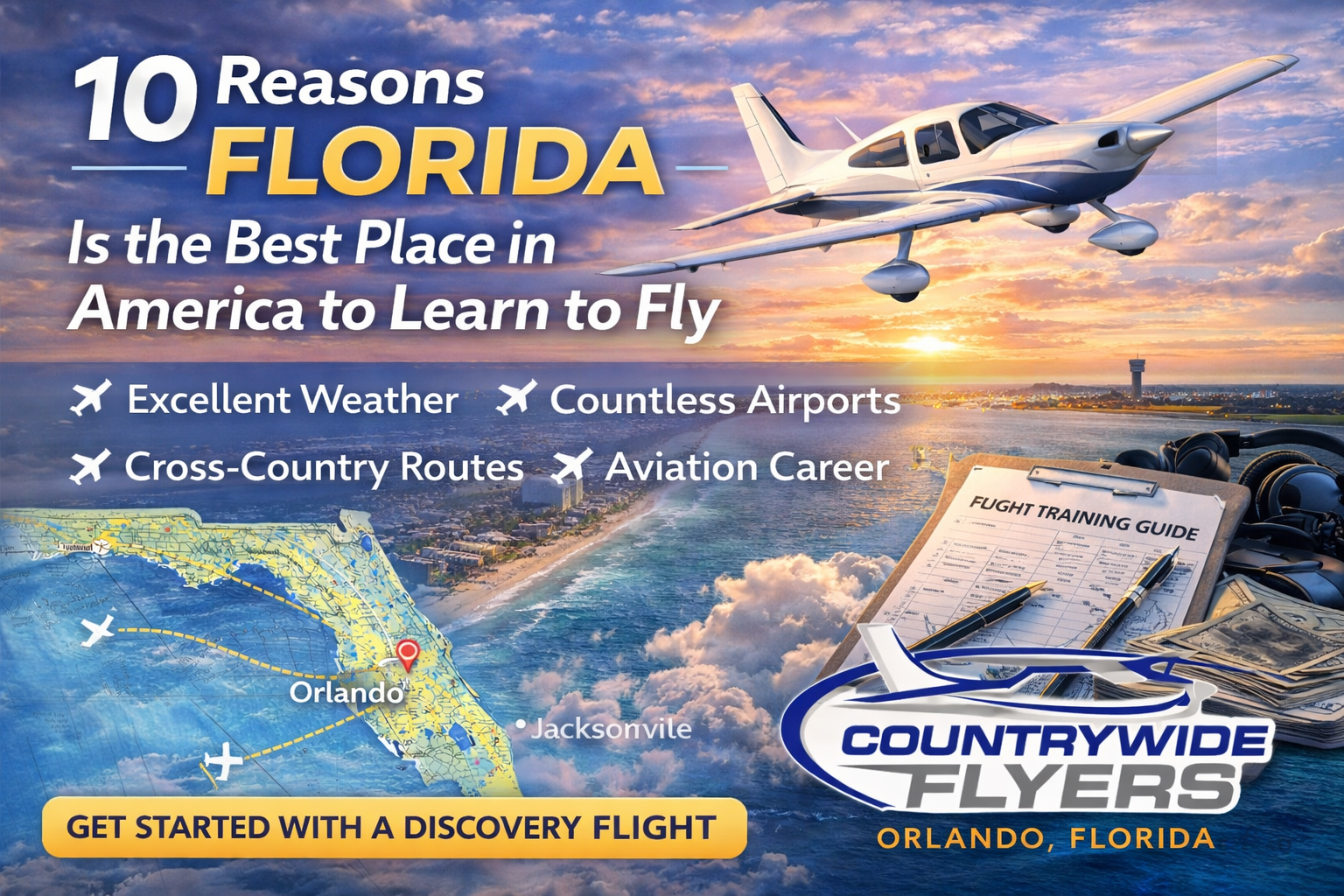
10 Reasons Florida Is the Best Place in America to Learn to Fly
The Crosswind Chronicle | Countrywide Flyers
For decades, Florida has been one of the most important aviation training hubs in the world. Every year thousands of aspiring pilots travel to the Sunshine State to begin their aviation journey. From student pilots working toward their private pilot license to international cadets training for airline careers, Florida continues to attract aviation enthusiasts from every corner of the globe.
But why?
What makes Florida such a powerful environment for flight training?
The answer lies in a combination of ideal weather, a dense network of airports, an enormous aviation infrastructure, and a vibrant community of pilots who share a passion for flight.
Whether you’re looking to earn your private pilot license, pursue a commercial aviation career, or simply experience the joy of flying, Florida provides an environment that accelerates learning and opens the door to incredible aviation opportunities.
In this comprehensive guide from The Crosswind Chronicle, we explore the 10 biggest reasons Florida is the best place in America to learn to fly.
1. Florida Has Some of the Best Flying Weather in the World
One of the most important factors in flight training is weather.
Pilots cannot train consistently if weather conditions prevent aircraft from flying. In many parts of the United States, harsh winters, snowstorms, and extended periods of poor weather can significantly slow down pilot training.
Florida offers the opposite.
The Sunshine State enjoys over 300 flyable days per year, making it one of the most reliable flight training environments in the country.
This consistent weather allows student pilots to:
• Train more frequently
• Build skills faster
• Avoid long training delays
• Complete certifications sooner
In northern states, winter weather can ground flight schools for weeks at a time. In Florida, training can continue almost year-round.
Consistent flying is one of the biggest advantages a student pilot can have.
2. Florida Has an Enormous Number of Airports
Another major advantage of learning to fly in Florida is the sheer number of airports available.
Florida has over 100 public-use airports, providing pilots with endless opportunities to practice navigation and cross-country flying.
From small rural airfields to busy international airports, Florida offers every type of airport environment a student pilot needs to learn real-world aviation skills.
Students can experience:
• Towered airports
• Non-towered airports
• Class B airspace
• Class C airspace
• Class D airports
• Quiet rural runways
This variety prepares pilots for flying anywhere in the country.
Within just a short distance of Orlando, pilots can fly to dozens of different airports, gaining valuable experience navigating diverse airspace environments.
3. Florida Is a Global Aviation Training Hub
Florida has built one of the most powerful aviation ecosystems in the world.
The state is home to:
• Flight schools
• Aviation universities
• Airline training programs
• Aircraft maintenance facilities
• Aviation manufacturers
• Charter operators
Because of this ecosystem, Florida has become a destination for aviation training not only for Americans but also for international students.
Thousands of student pilots from Europe, Asia, South America, and the Middle East come to Florida each year to begin their aviation careers.
This global aviation presence creates a unique environment where aspiring pilots are constantly surrounded by aviation professionals and mentors.
For a student pilot, being immersed in an aviation culture like this is incredibly motivating.
4. Cross-Country Flying in Florida Is Incredible
Cross-country flights are one of the most exciting parts of flight training.
A cross-country flight involves flying from one airport to another over a significant distance while navigating using charts, instruments, and landmarks.
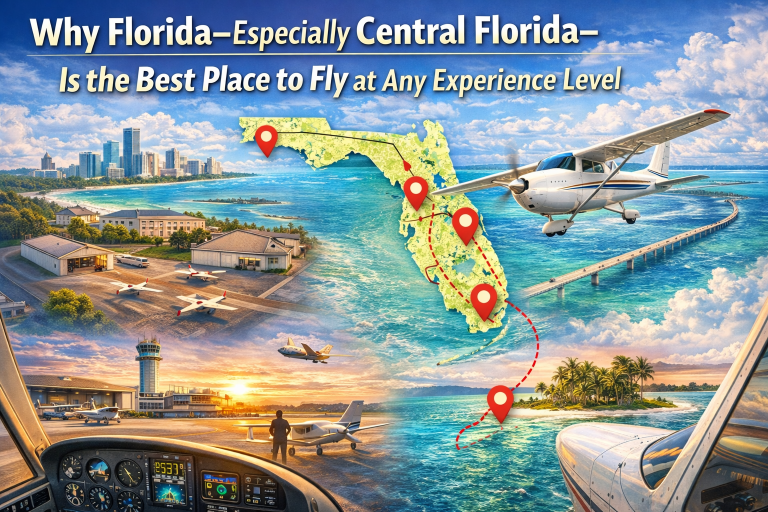
Florida offers some of the most scenic cross-country routes in the country.
Pilots can fly over:
• White sand beaches
• Crystal blue coastal waters
• Historic coastal cities
• Vast wetlands
• National parks
Popular cross-country destinations from Orlando include:
• Key West
• Savannah
• Tampa
• Naples
• Jacksonville
• St. Augustine
These routes help student pilots build experience while enjoying some of the most beautiful landscapes in the United States.
5. Year-Round Flight Training Means Faster Progress
One of the biggest frustrations student pilots experience is interrupted training.
If you only fly once every few weeks, it becomes difficult to retain skills and build confidence in the cockpit.
Florida’s climate allows students to fly consistently.
Students who fly two to three times per week often complete their private pilot license within three to six months.
This consistent training environment leads to:
• Faster skill development
• Lower training costs
• More efficient learning
In aviation, consistency is everything.
And Florida provides the perfect environment for it.
6. Florida Is Perfect for Building Flight Hours
For pilots pursuing a career in aviation, building flight hours is a critical step.
The Federal Aviation Administration requires pilots to accumulate 1,500 flight hours before qualifying for an Airline Transport Pilot certificate.
Florida’s weather and airport density make it one of the best places in the country to build flight time.
Pilots can easily plan long cross-country routes and fly multiple times per week.
Additionally, the variety of airspace environments helps pilots gain valuable experience navigating different types of aviation operations.
For aspiring airline pilots, Florida offers an ideal training ground.
7. The Aviation Community in Florida Is Massive
Aviation is not just about flying airplanes.
It is also about community.
Florida has one of the most active aviation communities in the United States.
Across the state you will find:
• Pilot meetups
• Fly-in events
• Aviation expos
• Aircraft shows
• Aviation seminars
This community creates countless opportunities for pilots to meet mentors, share knowledge, and build relationships within the aviation industry.
Organizations like Countrywide Flyers Cooperative Association help strengthen this sense of community by creating environments where pilots can learn, share experiences, and support each other’s aviation journeys.
Being surrounded by other aviation enthusiasts makes the learning process more exciting and motivating.
8. Florida Offers Some of the Best Flight Training Infrastructure
Florida’s aviation infrastructure is extremely advanced.
Across the state, you will find modern facilities that support high-quality flight training.
These include:
• Advanced flight simulators
• Modern training aircraft
• Professional flight instructors
• Maintenance facilities
• Aviation training centers
Many flight schools in Florida operate modern fleets equipped with glass cockpit avionics, providing students with exposure to the technology used in today’s aircraft.
This prepares student pilots for both recreational flying and professional aviation careers.
9. Florida Has Strong Career Opportunities in Aviation
For students pursuing aviation careers, Florida offers excellent job opportunities.
The aviation industry in Florida includes:
• Charter companies
• Corporate flight departments
• Airline training centers
• Tourism aviation operations
• Cargo carriers
Many pilots begin their careers by becoming flight instructors, helping train the next generation of aviators while building valuable flight hours.
From there, many transition into regional airlines, corporate aviation, or specialized aviation roles.
With the global aviation industry facing a growing pilot shortage, opportunities for well-trained pilots continue to expand.
10. Florida’s Scenery Makes Flying Unforgettable
Finally, one of the most underrated aspects of learning to fly in Florida is simply how beautiful it is.
Flying over Florida offers incredible views that make every training flight memorable.
Pilots can see:
• The Atlantic coastline
• The Gulf of Mexico
• The Florida Keys
• The Everglades
• Countless lakes and rivers
Few experiences compare to flying above the Florida coastline during sunrise or sunset.
These moments remind pilots why they chose aviation in the first place.
Learning to fly should be an inspiring experience, and Florida delivers that inspiration every day.
Getting Started on Your Aviation Journey
If you’re considering learning to fly, the first step is simple.
Take a discovery flight.
A discovery flight is an introductory experience where a certified flight instructor introduces you to flying and allows you to take the controls under supervision.
During this flight you will:
• Sit in the pilot’s seat
• Learn basic aircraft controls
• Experience takeoff and landing
• Try flying the airplane yourself
For many people, this first flight becomes the beginning of a lifelong passion.
The Role of Flying Clubs in Flight Training
Flying clubs have become increasingly popular among aspiring pilots.
Instead of traditional aircraft rental models, flying clubs allow members to share access to aircraft while benefiting from lower operating costs.
Flying clubs provide:
• Affordable aircraft access
• A strong pilot community
• Flexible scheduling
• Shared aviation knowledge
Clubs like Countrywide Flyers Cooperative Association bring pilots together in a supportive environment where learning and mentorship thrive.
For new pilots, this environment can make a tremendous difference in their aviation journey.
Final Thoughts
Learning to fly is one of the most rewarding experiences a person can have.
It combines technical skill, adventure, and the freedom to explore the world from a completely different perspective.
Florida stands out as one of the best places in the country to begin that journey.
With incredible weather, a massive aviation infrastructure, countless airports, and a vibrant community of pilots, the Sunshine State offers an unmatched environment for flight training.
Whether your goal is flying recreationally, traveling with family and friends, or building a professional aviation career, Florida provides the perfect runway to get started.
The sky is waiting.
All you have to do is take the first step.
The Crosswind Chronicle
The official aviation blog of Countrywide Flyers Cooperative Association