How Long Does It Take to Become a Commercial Pilot in Florida?
A Complete Guide for Future Pilots in the Sunshine State
By The Crosswind Chronicle — Countrywide Flyers
Becoming a commercial pilot is a dream shared by thousands of aviation enthusiasts across the United States. Florida, with its favorable weather, large number of airports, and vibrant aviation community, is one of the best places in the world to pursue that dream. But one of the most common questions aspiring aviators ask is:
“How long does it take to become a commercial pilot in Florida?”
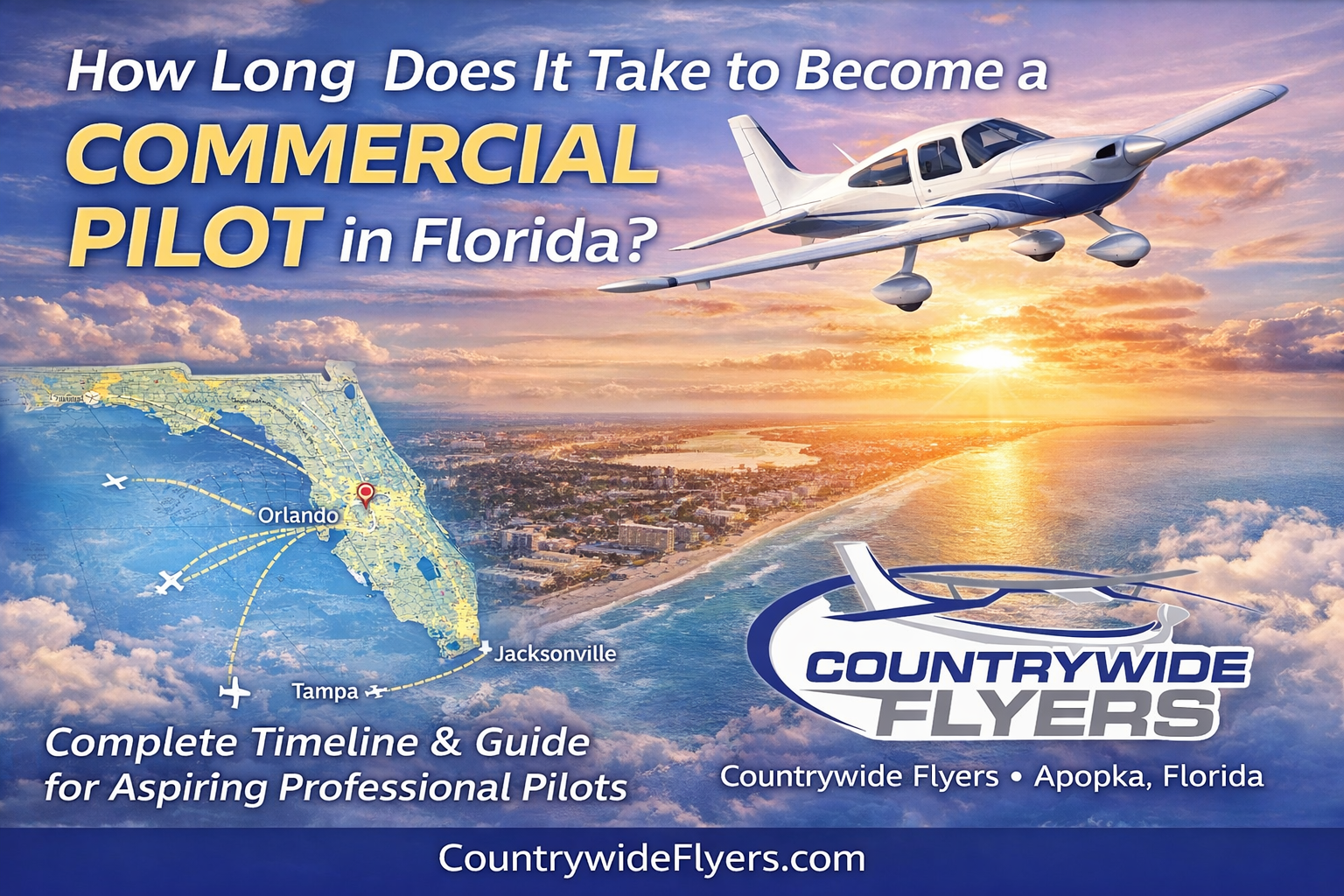
The short answer is that it typically takes 18 months to 3 years, depending on the training pace, flight frequency, and the specific career path a student pilot chooses.
However, the real answer is far more nuanced.
In this guide from The Crosswind Chronicle, we will break down the entire process of becoming a commercial pilot in Florida, including:
• The required pilot licenses
• Typical training timelines
• The number of flight hours needed
• Costs and training options
• How Florida’s weather helps accelerate training
• Realistic expectations for aspiring airline pilots
Whether you’re considering aviation as a career or simply curious about the process, this article will give you a clear roadmap from your first flight lesson to earning your commercial pilot certificate.
Why Florida Is One of the Best Places to Become a Pilot
Florida has long been considered one of the aviation capitals of the United States. There are several reasons why aspiring pilots from around the world travel here for training.
Year-Round Flying Weather
Florida offers 300+ flyable days per year, meaning flight training can continue almost continuously throughout the year. In northern states, winter weather can slow down training significantly.
More consistent flying means:
• Faster skill progression
• Shorter training timelines
• More affordable training overall
Dense Airport Network
Florida has over 100 public-use airports, giving student pilots plenty of destinations for cross-country training.
Within a short distance of Orlando alone, pilots can reach airports along both coasts, rural airfields, and busy controlled airports.
This variety creates excellent real-world training opportunities.
Vibrant Aviation Community
Florida is home to:
• Flight schools
• Aviation universities
• Maintenance shops
• Corporate aviation operations
• Airline training centers
For students pursuing a professional aviation career, the networking opportunities are enormous.
Understanding the Pilot License Progression
Becoming a commercial pilot is not a single step. It involves progressing through several certifications issued by the Federal Aviation Administration.
The typical progression looks like this:
- Private Pilot License (PPL)
- Instrument Rating (IR)
- Commercial Pilot Certificate (CPL)
- Certified Flight Instructor (CFI) (optional but common)
- Airline Transport Pilot (ATP) (for airline careers)
Each step builds on the previous one.
Let’s break down how long each stage typically takes.
Step 1: Private Pilot License (3–6 Months)
The Private Pilot License (PPL) is the foundation of all aviation training.
This license allows pilots to fly aircraft for personal use but not for compensation.
FAA Requirements
Minimum requirements include:
• 40 hours total flight time
• 20 hours with an instructor
• 10 hours solo flight
• Cross-country training
• Written exam
• Checkride with FAA examiner
However, the national average is closer to 60–70 flight hours before students are ready for their checkride.
Timeline in Florida
If a student flies 2–3 times per week, most pilots complete their private license in:
3 to 6 months
Students who train full-time can finish in 8–10 weeks.
Step 2: Instrument Rating (3–6 Months)
After earning a private license, the next major step is the Instrument Rating (IR).
This rating allows pilots to fly in:
• Clouds
• Low visibility
• Poor weather conditions
It dramatically improves safety and expands career opportunities.
Requirements
To earn an instrument rating, pilots must complete:
• 50 hours of cross-country flight time
• 40 hours of instrument training
• Instrument written exam
• Instrument checkride
Timeline
Most pilots complete instrument training in:
3 to 6 months
In Florida, training often progresses quickly due to frequent instrument conditions along the coast and afternoon weather patterns.
Step 3: Building Flight Time
Before earning a commercial certificate, pilots must accumulate flight hours.
The FAA requires:
250 total flight hours for a commercial pilot certificate.
After completing private and instrument training, pilots typically have around:
100–150 hours
This means an additional 100 hours must be built.
Time Building Methods
Pilots commonly build hours by:
• Renting aircraft
• Flying cross-country trips
• Joining flying clubs
• Sharing flights with other pilots
• Acting as safety pilots
In Florida, this phase can be completed quickly because of the many accessible airports.
Typical time required:
3–9 months
Step 4: Commercial Pilot Certificate (2–4 Months)
Once pilots reach 250 hours, they can begin training for the Commercial Pilot Certificate (CPL).
This certification allows pilots to be paid for flying.
Commercial Training Focus
Unlike earlier stages, commercial training focuses on:
• Precision aircraft control
• Advanced maneuvers
• Professional flight standards
Students learn maneuvers such as:
• Chandelles
• Lazy eights
• Steep spirals
• Power-off 180 landings
Timeline
Commercial training usually takes:
2 to 4 months
At this point, pilots have reached a major milestone.
They are officially professional pilots.
Total Timeline to Become a Commercial Pilot
Combining all phases:
| Stage | Typical Timeline |
|---|---|
| Private Pilot | 3–6 months |
| Instrument Rating | 3–6 months |
| Time Building | 3–9 months |
| Commercial Pilot | 2–4 months |
Total Time: 18 months to 3 years
Full-time students can complete training in 12–18 months.
Part-time students typically finish in 2–3 years.
How Many Flight Hours Are Required?
The FAA minimum for commercial certification is 250 hours.
Typical breakdown:
| Training Phase | Hours |
|---|---|
| Private Pilot | 60–70 |
| Instrument Training | 40–50 |
| Cross-Country | 50 |
| Commercial Training | 30–40 |
| Additional Time Building | Remaining hours |
Many pilots graduate with 250–300 hours.
Cost of Becoming a Commercial Pilot in Florida
Training costs vary depending on aircraft, instructors, and location.
Typical Florida costs:
| Training Phase | Estimated Cost |
|---|---|
| Private Pilot | $12,000–$18,000 |
| Instrument Rating | $8,000–$12,000 |
| Commercial Training | $15,000–$25,000 |
Total investment:
$40,000 to $70,000
Flying clubs and cooperative organizations can significantly reduce these costs by providing more affordable aircraft access.
What Happens After the Commercial License?
Most commercial pilots do not go directly to airlines.
The FAA requires 1,500 hours to qualify for an Airline Transport Pilot (ATP) certificate.
Therefore pilots must build additional experience.
Common paths include:
• Flight instructor (CFI)
• Banner towing
• Aerial photography
• Skydiving operations
• Charter operations
The most common route is becoming a Certified Flight Instructor.
The Flight Instructor Path
Many pilots earn instructor certificates after their commercial license.
Instructor ratings include:
• Certified Flight Instructor (CFI)
• Instrument Instructor (CFII)
• Multi-Engine Instructor (MEI)
These allow pilots to:
• Teach new students
• Build hours quickly
• Earn income while gaining experience
Most instructors reach 1,500 hours in 18–24 months.
Why Cross-Country Flying Matters
Cross-country flights are a critical part of professional pilot development.
They build experience in:
• Navigation
• Weather planning
• Fuel management
• Airspace coordination
Florida offers excellent cross-country opportunities.
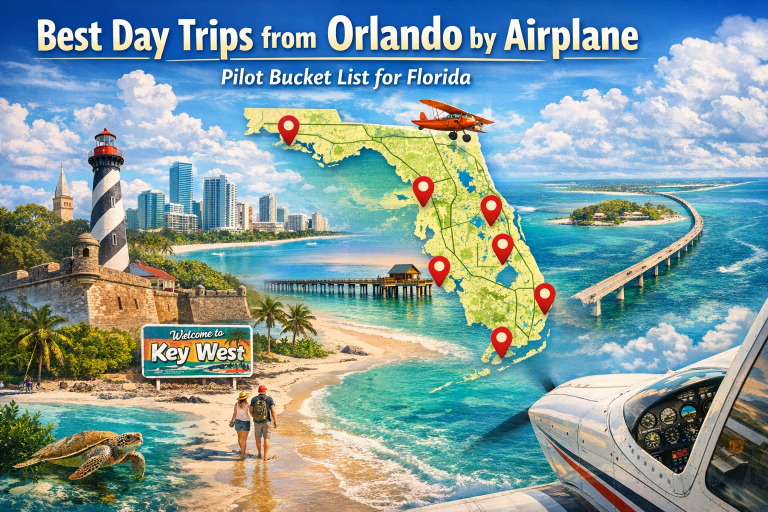
From Orlando, pilots can reach destinations like:
• Key West
• Savannah
• Destin
• Naples
• Tampa
• Jacksonville
These routes help pilots gain valuable experience.
The Airline Career Timeline
For pilots pursuing airline careers, the full journey usually looks like this:
| Phase | Timeline |
|---|---|
| Flight Training | 1–2 years |
| Flight Instructor / Time Building | 1–2 years |
| Airline First Officer | Entry level |
| Airline Captain | 5–10 years |
Total time from beginner to airline pilot:
3–5 years
Is Becoming a Commercial Pilot Worth It?
For those passionate about aviation, the answer is almost always yes.
Aviation offers:
• Unique career opportunities
• Travel around the world
• Competitive salaries
• Exciting challenges
• A tight-knit community
The journey requires dedication, but the rewards are significant.
How Flying Clubs Help Future Pilots
One of the biggest barriers to aviation training is cost.
Flying clubs provide a solution.
Organizations like Countrywide Flyers Cooperative Association allow pilots to access aircraft at significantly reduced costs compared to traditional flight schools.
Benefits include:
• Lower hourly aircraft rates
• Community support
• Shared aviation experiences
• Flexible flying schedules
For pilots building hours toward commercial certification, this environment can be extremely valuable.
Tips for Aspiring Commercial Pilots
If you’re considering a career in aviation, here are some practical tips.
Fly Consistently
The fastest way to learn is to fly regularly.
Students who fly weekly progress much faster.
Study the Ground Knowledge
Understanding weather, navigation, and regulations will make flight training easier.
Network with Other Pilots
Aviation is a community-driven industry.
Connecting with other pilots can lead to mentorship and career opportunities.
Focus on Safety
Professional pilots prioritize safety above everything else.
Developing good habits early will serve you throughout your career.
The Future of Pilot Demand
The aviation industry is currently experiencing a significant pilot shortage.
According to industry forecasts:
• Airlines will need tens of thousands of pilots in the next decade.
• Many senior airline captains are reaching retirement age.
• Regional airlines are expanding hiring programs.
For aspiring pilots, the timing has rarely been better.
Final Thoughts
Becoming a commercial pilot in Florida is an achievable goal for those who are committed to the journey.
While the process requires dedication, training, and financial investment, the path is clearly defined.
Most pilots complete their training in 18 months to 3 years, progressing from their first flight lesson to professional certification.
Florida’s excellent weather, diverse airports, and vibrant aviation community make it one of the best places in the world to begin that journey.
For those who dream of flying professionally, the runway is open.
The sky is waiting.
The Crosswind Chronicle
The official aviation blog of Countrywide Flyers
If you’re interested in learning more about aviation, flight training, or joining a flying community, explore our resources and connect with fellow pilots who share the same passion for flight.
how long does it take to become a commercial pilot in Florida
fastest way to become a pilot in Florida
commercial pilot training Orlando Florida
how many flight hours for commercial pilot license
cost to become a commercial pilot Florida