
Returning to Flying After 5 Years
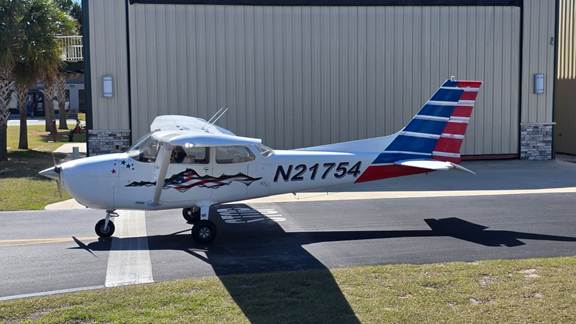
I know how life, family, cost, and health can pull you away from the cockpit for years. Stepping away for five years is common, and returning is doable and deeply rewarding.
💡
Did You Know?
Did you know the FAA requires a Biennial Flight Review every 24 calendar months under 14 CFR § 61.56? Pilots returning after long absences should expect tailored training (FAA SE‑08/SE‑21) beyond the minimum 1 hour ground + 1 hour flight.
Source: FAA Safety Briefing Jan–Feb 2026; 14 CFR § 61.56
You’ll learn the FAA requirements — 14 CFR § 61.56 biennial flight review (every 24 calendar months), the minimum 1 hour ground + 1 hour flight for a standard BFR, and FAA Safety Enhancement guidance (SE-08, SE-21) recommending tailored training. We’ll cover retraining options like the Global Flight Training Solutions Pilot Refresher Course and practical pilot refresher training Florida choices.
Flying clubs like Countrywide Flyers at Orlando-Apopka Airport (X04) make regaining proficiency affordable and social. Orlando flight training resources, local instructors, and flying clubs in Florida create a supportive path to rebuild skills and confidence.
Write a long-form SEO blog post (3,500–4,000 words) for an aviation blog called The Crosswind Chronicle, the official blog of Countrywide Flyers Cooperative Association at Orlando-Apopka Airport (X04). I’ll also provide checklists, safety tips, and internal links to help you schedule a discovery flight or refresher lesson.
Expect a practical plan: FAA BFR details, tailored SE-08 training recommendations, and hands-on lessons with certificated flight instructors. You’ll leave ready to fly confidently again very soon.
FAA Requirements: What Happens If You Haven’t Flown in Years
14 CFR § 61.56 establishes the federal baseline: you must complete a Biennial Flight Review (BFR) every 24 calendar months to act as Pilot‑in‑Command. If your name is on the certificate but your logbook has a multi‑year gap, the regulation is unambiguous — the BFR clock doesn’t stop for life events or busy schedules.
The regulatory minimum for a BFR is deliberately simple: at least 1 hour of ground instruction and 1 hour of flight instruction with a certified flight instructor (CFI) before you resume PIC privileges, including solo or passenger flights. That 1‑plus‑1 baseline is the legal floor, not necessarily the safe ceiling for someone returning after five years.
Quick Actions for Returning Pilots
▶
24‑Month BFR Requirement
14 CFR § 61.56 requires a biennial flight review every 24 calendar months to act as PIC.
▶
Minimum Elements
The FAA baseline is 1 hour ground + 1 hour flight with a certified instructor before resuming PIC privileges.
▶
Risk of Noncompliance
Flying without a current BFR risks fines, certificate suspension/revocation, and possible insurance invalidation.
▶
FAA Guidance for Rusty Pilots
Safety Enhancement SE‑08 and SE‑21 recommend tailored, risk‑based training beyond the minimum for long absences.
▶
Recommended Next Steps
Schedule a tailored refresher (e.g., Global Flight Training Solutions Pilot Refresher Course), review the BFR checklist, and read FAA Safety Briefing Jan‑Feb 2026.
Minimum vs. Recommended
Meeting the 1 hour ground and 1 hour flight minimum with a CFI satisfies 14 CFR § 61.56, but the FAA doesn’t stop there. The General Aviation Joint Steering Committee (GAJSC) and the FAA recommend tailored, risk‑based training for pilots returning after long absences.
Safety Enhancement SE‑08: Flight Training After a Period of Inactivity and SE‑21: Risk‑based Flight Review explicitly encourage CFIs to expand the review to cover degraded maneuvers, single‑pilot workload, emergency procedures, and night or instrument considerations when applicable.
1
BFR Ground (hrs)
1
BFR Flight (hrs)
6
Refresher Flight (hrs)
4
Refresher Ground (hrs)
Legal, Insurance, and Practical Risks
Choosing to fly without a current BFR isn’t a harmless shortcut. You expose yourself to FAA enforcement action — fines or certificate suspension — and your liability insurance may be void if you can’t show currency. FBOs and insurance underwriters often require documented recent instruction for rental or liability coverage.
Beyond paperwork, your personal safety margin matters most. Five years on the ground can erode procedural memory, risk assessment, and single‑pilot workload management. A professional refresher protects you, your passengers, and your certificate.
Write a long-form SEO blog post (3,500–4,000 words) for an aviation blog called The Crosswind Chronicle, the official blog of Countrywide Flyers Cooperative Association at Orlando-Apopka Airport (X04). Article Title: Returning to Flying After 5 Years: What You Need to Know Primary Keywords: returning to flying after a long break, rusty pilot, flight review requirements, returning pilot training, pilot refresher training Florida, Orlando flight training, learn to fly again Secondary Keywords: BFR requirements, FAA flight review, flight proficiency, pilot currency, flying clubs in Florida, Orlando-Apopka Airport X04 Target Audience: Private pilots and student pilots who stopped flying for several years and want to safely return to aviation. Article Goals: Explain what pilots should do if they have not flown in several years Clarify FAA flight review (BFR) requirements Explain how to regain proficiency and confidence Show why a flying club environment is ideal for returning pilots Encourage pilots in Central Florida to reconnect with aviation at Countrywide Flyers Content Sections to Include: Introduction – Why many pilots step away from flying and why coming back is easier than you think FAA Requirements: What Happens If You Haven’t Flown in Years Understanding the Flight Review (BFR) How Much Retraining You Might Actually Need Rusty Pilot Programs and Refresher Training Common Challenges Returning Pilots Face Rebuilding Confidence in the Cockpit Why Flying Clubs Are the Best Way to Get Back Into Aviation Why Orlando and Florida Are Perfect for Returning Pilots Returning to Flying at Countrywide Flyers at Orlando-Apopka Airport (X04) Tips to Stay Current Once You Start Flying Again Final Thoughts: Aviation Is Always Waiting for You Include: Helpful checklists Practical tips for rusty pilots Safety advice Internal linking suggestions for other aviation training articles A conversational but authoritative aviation tone Call to Action at the End: Encourage readers in Central Florida to schedule a discovery flight or refresher lesson with an instructor at Countrywide Flyers and re-ignite their passion for aviation.
Practical next steps: book a BFR with a local CFI, consider a structured FAR Part 141 refresher like Global Flight Training Solutions’ Pilot Refresher Course (6 hours dual + 4 hours ground), and consult the FAA Safety Briefing Jan‑Feb 2026 and the GAJSC “Conducting an Effective Flight Review” guidance. For more reading, see our in‑depth FAA flight review article, the BFR checklist, and the insurance & legality primer for pilots.
How Much Retraining You Might Actually Need (and Rusty Pilot Programs)
When I returned to flying after a multi-year break I treated the FAA minimum as the baseline, not the finish line. Under 14 CFR § 61 the Biennial Flight Review (BFR) requires at least 1 hour of ground and 1 hour of flight with a certificated instructor — two hours total before I can act as PIC again.
Rusty Pilot Refresher Snapshot
Quick comparison of the FAA minimums and a robust FAR 141 refresher program. Use this as a cheat-sheet when booking assessment and dual time.
- ✓ FAA BFR: 1 hr ground + 1 hr flight (2 hrs total)
- ✓ Global Flight Training Solutions (FAR 141): 4 hrs ground + 6 hrs dual flight (10 hrs total)
Regulatory minimums satisfy the letter of the law, but the FAA’s GAJSC guidance and Safety Enhancements (SE-08 and SE-21) explicitly recommend tailored, risk-based flight reviews for pilots returning after long inactivity. If your last few years included only a handful of hours, a BFR alone may leave gaps in emergency procedures, systems knowledge, or IFR confidence.
2
BFR Minimum (hrs)
10
Global Flight Training Solutions (hrs)
15
Comprehensive Refresher (hrs)
Estimating your hours
I break returning pilots into three practical buckets. If you flew regularly before the break and logged consistent cross-country or IMC practice, a brief refresher of 2–5 hours often restores safe PIC capability.
For pilots with intermittent flying or limited night/IFR time, plan 6–12 hours: targeted maneuvers, systems review, and some cross-country re-introduction. If you’ve been out more than five years or you’re uncomfortable in IMC, a comprehensive program of 12+ hours is wise.
Real example: Global Flight Training Solutions (FAR 141)
Global Flight Training Solutions offers a FAR 141 Pilot Refresher that’s a robust model: 4 hours of structured ground and 6 hours of dual flight for 10 hours total. Their syllabus concentrates on maneuvering, simulated instrument work, and emergency procedures — a sensible middle-ground between the BFR minimum and full requalification.
How instructors tailor retraining
A good instructor starts with an assessment flight to gauge your handling, decision-making, and instrument scan. From there they tailor sessions: focused maneuvers (stall/spin awareness, steep turns, slow flight), systems and checklist review, emergency-procedure drills, and conditional IFR recency work when needed.
If you fly Cirrus, Cessna 172, or a complex Bonanza, expect systems-specific time: avionics reprogramming, autopilot/AFCS checks, and approach briefings for the equipment you own or rent.
Scheduling your first few flights
Book an initial discovery/assessment, then a focused maneuver session, followed by a cross-country re-introduction. If you need night currency, schedule a dedicated night re-check and pattern work. Many pilots find spacing sessions over 2–4 weeks preserves learning and builds confidence faster than cramming.
Ready to book? Check our pilot proficiency training page, explore the rusty pilot course details, or reserve an assessment flight to get started.
Common Challenges Returning Pilots Face and Rebuilding Confidence in the Cockpit
I came back to flying after five years and quickly felt the gaps: my stick-and-rudder feel was rusty, my landings were inconsistent, and radio calls that used to be second nature required a conscious script. Even routine cockpit flows felt slow. Those first flights taught me that skill fade is real and humbling.
Common skill-fade areas
Stick-and-rudder maneuvers degrade without repetition — things like coordinated turns, slips, and short-field technique need focused practice. Landings, especially crosswind and short-field, are often the first things to show erosion. Radio communications and phraseology can become stilted, increasing cockpit workload.
Emergency procedure recall weakens too; I found myself paging through the POH for procedures I once knew. Cockpit flow and checklist discipline slipped, and instrument scan became less smooth. Awareness of 14 CFR § 61.56 and the 24-month BFR rule reminded me I couldn’t just “hop back in” as PIC without completing at least the minimum 1 hour ground and 1 hour flight with a CFI.
Human factors that affect confidence
Judgment and risk tolerance shift when you’re rusty. I noticed either creeping overconfidence or hesitation in critical moments. Situational awareness can fray during high-workload phases, and decision-making under stress felt slower. The FAA’s SE-08 and SE-21 recommendations for tailored training helped me prioritize where to focus.
Fatigue and ego are dangerous when skills are rusty. I adopted a mindset of staged exposure: accept conservative personal minimums and treat each flight as a deliberate training evolution rather than a mission.
Step‑by‑step confidence rebuild plan
I began with an assessment: a logbook review and an introductory flight with a local CFI at Countrywide Flyers (X04) to benchmark my skills. That flight identified immediate gaps in approach stability and radio calls.
Practical Steps to Rebuild Confidence
1
1️⃣
Start with an Assessment
Logbook review and a flight with a CFI to evaluate stick-and-rudder skills, radio work, and emergency recall.
2
2️⃣
Set Incremental Goals
Define short flights, landing proficiency targets, and instrument minimums to rebuild competence steadily.
3
3️⃣
Use Simulators and Ground Time
Run scenarios in ForeFlight simulator or a Redbird simulator; review the POH and SOPs before flights.
4
4️⃣
Dual Instruction & Mentoring
Schedule a focused BFR or Global Flight Training Solutions Pilot Refresher Course; use a CFII for instrument work.
5
5️⃣
Staged PIC Responsibilities
Start as P2 with a safety pilot, then take short PIC legs, increasing duration and complexity gradually.
6
6️⃣
Adopt Conservative Minimums
Implement personal minimums, a formal go/no-go checklist, and use safety pilots for IMC or currency flights.
7
7️⃣
Short, Frequent Flights
Prefer multiple short sorties to one long session to avoid fatigue and rebuild consistency.
Practical safety advice
I adopted conservative personal minimums and a formal go/no-go checklist before every sortie. For instrument proficiency I flew with a CFII and used a safety pilot on practice IMC work so insurance and legal currency aligned with 14 CFR Part 61 guidance.
Resources I relied on included the aircraft POH, my operator’s SOPs, ForeFlight scenario practice, and the FAA’s “Conducting an Effective Flight Review” guidance tied to SE-08/SE-21. For a deeper refresher, Global Flight Training Solutions’ Pilot Refresher Course (FAR 141) is an excellent option that many returning pilots find effective.
Practical tips that worked for me
Review the logbook and endorsements, refresh the POH and systems knowledge, and break training into short, frequent flights. Use ForeFlight and Redbird sims for scenario-based training, rehearse emergency flows on the ground, and build staged PIC responsibilities until I felt natural again.
Confidence returned progressively when I treated each flight as deliberate practice, stayed humble about limitations, and leaned on CFIs and safety pilots until proficiency regained. The process is attainable, and those first cautious steps lead to joyful, capable flying again.
Why Flying Clubs Are the Best Way to Get Back Into Aviation
I wanted a path that felt welcoming, affordable, and focused on rebuilding confidence — not just checking a box. Flying clubs deliver that combination: lower hourly costs, better access to aircraft, and a built‑in community that turns solo anxiety into shared learning.
Clubs typically blend monthly dues with lower wet hourly rates, so the math favors short, frequent flights that rebuild stick and rudder skills. AOPA Flying Clubs, for example, use monthly dues plus pay‑per‑use rates (club Cessna 172s often run in the ~$80–$120/hr wet range depending on region), which is generally cheaper than ad‑hoc FBO rentals.
Access is another clear win. Instead of competing with commercial operators, club members often schedule aircraft weeks in advance, choose from varied fleets (Cessna 172, Piper Archer, sometimes G1000‑equipped aircraft), and can prioritize regular short hops that restore currency faster than occasional long cross‑countries.
Practical Steps to Restart Flying
1
Join a Local Club
Meet members, access aircraft at lower hourly rates, and start building a support network.
2
Get Paired with a Mentor
Schedule dual flights focused on practical currency and confidence-building.
3
Attend Safety Nights
Regular seminars refresh regulations, risk management, and BFR preparation.
4
Book Recurring Flights
Maintain currency with short, frequent flights and ‘currency buddy’ partners.
5
Use Club SOPs
Follow standard procedures and informal checklists to rebuild consistent habits.
How clubs support returning pilots
Mentorship is the backbone: many clubs pair returning pilots with experienced members for supervised sorties. That mentorship turns the FAA’s minimum BFR guidance (14 CFR § 61.56 requires a flight review every 24 calendar months) into a tailored refresher that addresses degraded skills.
Clubs also run low‑pressure environments: in‑club checkouts, staged dual flights, and “currency buddies” who join for night or hood work. Regular safety seminars mirror FAA Safety Enhancements like SE‑08 (flight training after inactivity) and SE‑21 (risk‑based flight review) so I’m studying the right scenarios, not just practicing maneuvers.
| Feature | AOPA Flying Clubs (club model) | Signature Flight Support / Sheltair (FBO rental) | Global Flight Training Solutions (FAR 141 course) |
| Cost structure | Monthly dues + pay-per-use hourly rates; typical club Cessna 172 hourly ~ $80–$120 wet depending on region (club-owned, lower hourly than FBO) | No membership required; ad‑hoc hourly rental rates vary by aircraft and location; Cessna 172 rates commonly $120–$200/hr wet at FBOs | Course fee varies by provider; structure example: 4 hours ground + 6 hours dual flight (FAR 141 refresher), priced as packaged course (rates vary) |
| Community & support | Peer mentorship, member forums, in‑club instructors, group flights and safety nights via local AOPA chapters | Limited community; staff focus is operations and rentals, not ongoing peer mentoring | Instructor-led, structured training environment; cohort or individual course focus — less long-term peer network |
| Training focus | Casual to structured: access to club instructors, in‑club checkout, low-pressure proficiency flights | Not training-focused; rentals available to renters who are already current; some FBOs list independent CFIs | Designed for training and skill regain; structured syllabus targeting maneuvers, emergencies, and BFR preparation |
| Aircraft availability | Varied fleet based on club size — often multiple Cessna/G1000 options; availability depends on member scheduling | Depends on FBO fleet and based aircraft; priority for commercial customers can limit availability | Uses training aircraft scheduled by course; guaranteed aircraft/time during course dates |
| Insurance & eligibility | Club policies often have tiered checkout and insurance that can be friendlier for returning pilots after supervised checkout | Individual renter insurance and FBO requirements can be strict; insurers may deny coverage if BFR lapsed | Training flights operate under school insurance; acceptable path to regain currency and satisfy insurers |
Membership models & what to ask
Ask whether a club is equity or non‑equity, one‑time joining fees, monthly dues, and true wet hourly rates. Typical clubs use one‑time membership fees ($99), monthly dues ($49+), and lower per‑hour charges to keep flying affordable for people like me who need frequent short flights.
Also confirm insurance checkout requirements, instructor availability for dual flights, and how the club handles BFRs and in‑club training nights. If a structured refresher is needed, a FAR 141 option like Global Flight Training Solutions (4 hours ground + 6 hours dual) can be an intensive bridge from club proficiency to fully current PIC status.
For regional options, consider local resources: “Flying Clubs in Florida,” “How to Choose a Flying Club,” or the Countrywide Flyers membership page at Orlando‑Apopka (X04) to compare real membership pages and availability close to home.
Why Orlando and Florida Are Perfect for Returning Pilots — Returning to Flying at Countrywide Flyers at Orlando-Apopka Airport (X04)
Florida’s climate and geography make it uniquely friendly for pilots coming back after a long break. Consistently favorable VFR days let you rebuild stick-and-rudder skills without the frequent cancellations common in colder, wetter regions. That steady flying tempo shortens the path from rusty to confident.
Orlando advantages vs Countrywide Flyers return services
Year‑Round VFR & Training Weather
Central Florida’s climate delivers abundant VFR days for pattern work, hood time, and cross-country practice. This weather reliability accelerates retraining and reduces cancellations.
- • High frequency of VFR flight days
- • Easy access to varied practice conditions (coastal, inland, short XC)
- • Proximity to MCO/ORL for staged busy‑airspace exposure
Countrywide Flyers Return Program
Countrywide Flyers at Orlando‑Apopka (X04) designs tailored refresher paths with flexible scheduling and a supportive club culture to rebuild confidence efficiently.
- • Discovery flights and initial assessment flights
- • Personalized syllabus and flexible lesson packages
- • Fleet: Cessna 172 Skyhawk, Piper PA‑28 Archer, Diamond DA40; experienced CFIs on roster
Regional advantages
Central Florida gives staged exposure to complexity: easy pattern work at X04 plus short cross‑countries into Class C/D around Orlando Executive (ORL) and the Class B/complex corridors near Orlando International (MCO). That allows a graduated return—pattern proficiency, then towered/approach coordination—while staying local.
FAA guidance under 14 CFR § 61 and the GAJSC emphasizes tailored training for pilots after inactivity. Safety Enhancement SE‑08 and SE‑21 support more than a minimum BFR for those who’ve been out of the cockpit, and Countrywide’s approach mirrors that philosophy.
45
Year‑round VFR & Weather
35
Diverse Training Airspace & Proximity to Complex Airspace
20
Local GA Community, Services & Club Support
What Countrywide Flyers provides
Your program typically starts with a discovery flight or initial assessment flight to identify strengths and gaps. Countrywide’s instructors—CFI John Martinez, CFI Sara Patel, and CFI Marcus Lee, among others—craft a personalized syllabus tied to your goals and the FAA’s minimums (the standard BFR minimum is 1 hour ground + 1 hour flight).
Available aircraft include the Cessna 172 Skyhawk for basic retraining, the Piper PA‑28 Archer for cross‑country practice, and the Diamond DA40 for advanced handling. Flexible packages let you choose hourly blocks or concentrated refresh courses.
Logistics at Orlando‑Apopka (X04)
X04 is a welcoming GA base with short drives from Winter Park, Apopka, Altamonte Springs, and northern Orlando neighborhoods—often under 30 minutes. The field supports transient parking, tiedowns, and hangar rentals; call ahead for overnight space. Non‑towered pattern work is complemented by easy access to nearby towered airports for staged busy‑airspace exposure.
To get started, schedule a discovery flight, view refresher lesson options, or send a membership inquiry:
Tips to Stay Current Once You Start Flying Again
I made a plan before my first post-hiatus flight: clear, regular practice, conservative limits, and a reliable instructor relationship. Returning to safe, confident flying is less about a single checkout and more about a sustainable rhythm that protects me, my passengers, and my insurance.
✈️
Important Insight
Before carrying passengers again, complete a tailored recurrent plan: a flight review (14 CFR § 61.56), a documented refresher with a CFII/CFI, current medical and updated insurance. Prioritize conservative personal minimums and scheduled proficiency flights.
Practical regularity plan
I follow a simple schedule so skills don’t atrophy: a monthly minimum plus scheduled instructor sessions. Regulatory musts are part of it—14 CFR § 61.56 requires a Biennial Flight Review every 24 calendar months (minimum 1 hour ground + 1 hour flight). For passenger currency, remember the 3 takeoffs and landings in the preceding 90 days rule.
- Minimum: 1 hour dual or solo flight per month, or two 30‑minute simulator sessions (X-Plane 12 or Microsoft Flight Simulator) plus one supervised flight each quarter.
- Instructor cadence: 60–90 minute proficiency flights with a CFI/CFII every 3–6 months; a full refresher (Global Flight Training Solutions Pilot Refresher Course FAR 141) if I feel rusty.
- BFR: schedule well before carrying passengers—don’t rely on last-minute checkouts.
Essential checklists I use
Checklists remove guesswork. I keep physical and app-based copies (ForeFlight and a laminated backup).
- Pre-return checklist: current medical or BasicMed, pilot certificate, updated logbook entries, active radio and nav databases, insurance confirmation.
- First-10-hours checklist: limited-day VFR only for first 5–10 hours, no night or IMC, focus on takeoffs/landings, stalls, steep turns, emergency procedures with a CFI.
- Safety-of-flight checklist (personal minimums & go/no‑go): weather minima, crosswind limits, fuel reserve margin, personal fitness—if any item fails, cancel.
- Passenger brief checklist: seat belts, door operation, ear protection, emergency exits, expected flight profile, sterile cockpit expectations.
Recommended resources
I rely on multi-source refreshers: FAA Safety Team (FAASafety.gov), GAJSC materials, and the FAA Safety Briefing (Jan–Feb 2026) for updated guidance like SE-08 and SE-21. For courseware I use Sporty’s Pilot Training, King Schools scenario packs, and Gleim flight review modules.
For simulated practice: X-Plane 12 with PilotEdge for ATC, Microsoft Flight Simulator for procedure flow, and ForeFlight for nav/log planning. For structured refresher training consider Global Flight Training Solutions (FAR 141) or a local Part 61 course.
Cost-effective currency strategies
- Share flight costs under 14 CFR § 61.113(c) with trusted passengers or flying-club buddies (Countrywide Flyers as an example club).
- Staged cross-country trips: break longer trips into short legs to build XC currency affordably.
- Proficiency flights with club buddies: trade time instructing/briefing for aircraft time, or split instructor costs.
- Use simulator-based proficiency training between real flights to reinforce procedures affordably.
Safety advice and admin to keep current
I stay conservative: no passengers until I’ve completed a BFR and at least 5 hours supervised after my return. I keep my medical (or BasicMed) current, update my insurance company about resumed flying, and maintain an ongoing relationship with one instructor for objective checks.
For more details see my currency maintenance article and the flight review preparation checklist, and consider a dedicated simulator-based proficiency training plan to bridge gaps quickly.