What is a Flying Club and Why Choose It?
The dream of learning to fly often begins with cockpit views and cross-country freedom, yet many assume flight schools are the only path. Flight schools such as Part 141 academies deliver structured curricula and guaranteed instructor availability but typically charge higher hourly rates and follow rigid timelines.
Did You Know?
Flying clubs typically cut effective aircraft rental costs by about 30% — for example, a Cessna 172 can cost ~ $93/hr in a club versus $131/hr rental at commercial schools.
Source: Aggregated 2024–2026 training cost comparisons
A flying club — what is a flying club — is a member-owned cooperative that helps people learn to fly affordably. Shared ownership, member CFIs, and flexible scheduling often cut costs (about 30%) while improving access to aircraft like a Cessna 172 and building a mentorship-focused community.
For prospective students searching learn to fly or pilot training near me and wondering how to become a pilot, clubs complement tools like ForeFlight and Garmin avionics training with peer-led seminars and practical maintenance exposure under airport-approved oversight.
What is a flying club? (Definition and how it works)
A flying club is a cooperative aviation community where members jointly own or fund aircraft, share operating expenses, and govern access by democratic rule. The core idea answers what is a flying club: lower hourly rates, collective maintenance oversight, and a peer network for mentorship and safety seminars.
Operational models
Clubs commonly adopt cooperative ownership, lease-share, or nonprofit structures. Members typically pay a one-time buy-in or equity share plus recurring dues that cover insurance, hangar, and fixed costs; hourly wet or dry rates cover fuel and variable maintenance.
Instruction and staffing
Instruction models vary: roughly 70% of clubs offer primary instruction via member CFIs, while others contract instructors or partner with local Part 61 flight schools. Member CFIs lower instructional overhead, though contracted instructors can provide guaranteed availability for checkrides and advanced courses.
Managing costs and rates
Clubs set wet/dry rates and hourly minimums to match actual expenses. Typical savings are material—clubs cite about 30% lower effective rates (example: Cessna 172 effective $93/hr versus $131/hr rental at comparable FBOs). Tools like FlightCircle for scheduling and maintenance logs, ForeFlight for planning, and QuickBooks for club accounting are common in efficient clubs.
Scheduling, maintenance, and safety
Online booking systems, published wet/dry policies, and a small maintenance reserve keep availability high. With airport approval, member mechanics can perform work that reduces costs; clubs still follow FAA maintenance rules and often contract annual inspections to certified shops.
Countrywide Flyers — a practical example
Countrywide Flyers is structured as a cooperative with a mission to make aviation more accessible. It uses member governance, published dues, and a mixed instructor model to balance affordability with instructional quality.
Flying club quick facts
Definition: Cooperative aviation community
Member-owned or member-funded organization where costs and resources are shared to reduce hourly rates.
Ownership models
Cooperative ownership, lease-share, or nonprofit structures—Countrywide Flyers uses a cooperative model focused on accessibility.
Instruction options
~70% of clubs rely on member CFIs for primary instruction; others contract instructors or partner with local Part 61 schools.
Cost structure
Members pay dues and wet/dry rates; clubs often achieve ~30% savings (e.g., C172 $93/hr effective vs $131/hr rental).
Scheduling & maintenance
Online booking, agreed wet/dry policies, and member mechanics (with airport approval) keep rates low and availability high.
Community benefits
Mentorship, safety seminars, and shared decision-making create a supportive environment for hobbyist and low-rate training.
Flying club vs flight school — key differences
Choosing between a flying club and a flight school comes down to ownership, cost structure, instructor model, scheduling, fleet access, and rental restrictions. Clubs emphasize shared ownership and community-managed costs, while flight schools (Part 61 FBOs or Part 141 academies) operate commercially with structured curricula and guaranteed instructor staffing. Below are concrete differences and practical implications for hobbyists and aspiring professional pilots.
Countrywide Flyers — club advantages
Cooperative ownership, lower effective hourly rates, member CFIs, flexible scheduling, and a member-first maintenance culture focused on modern training aircraft.
- ✓ Cooperative ownership shares
- ✓ ~30% lower effective hourly rates ($93/hr for C172)
- ✓ Member CFIs & mentorship
- ✓ Flexible booking and member-first maintenance
Ownership and cost structure
Flying clubs operate as cooperative or member-owned groups where acquisition and fixed costs are shared. That shared model typically reduces effective hourly costs—research-based examples show club Cessna 172 rates around $93/hr versus roughly $131/hr at many flight schools, delivering about a 30% savings for routine flying.
Flight schools and Part 61 FBOs run commercial operations: aircraft are company-owned, rates reflect full commercial overhead, and instructor billing is added on top. Large academies like ATP leverage scale (400+ aircraft) to offer block discounts but still target revenue per training seat.
Instructor model and regulatory context
Flying clubs often rely on member CFIs for primary instruction; roughly 70% of clubs use member CFIs, which gives flexibility and mentorship but less formal FAA oversight per syllabus. Clubs typically operate under Part 61 rules or as non‑certificated club operations, which allow tailored training paths and flexible lesson pacing.
Part 141 schools follow FAA‑approved curricula with stricter hour requirements and oversight—beneficial for students pursuing commercial or airline careers because Part 141 programs can shorten training timelines and provide structured progression. Part 61 (including many FBOs and clubs) is more flexible for recreational pilots or those balancing irregular schedules.
Fleet, maintenance, scheduling, and rental restrictions
Fleet size varies: Countrywide Flyers and similar clubs maintain small-to-medium, member-focused fleets, while local Part 61 FBOs keep fleets sized to demand. Large academies such as ATP maintain 400+ aircraft to support high-volume training. Clubs often permit member mechanics (with airport approval) to perform maintenance tasks, lowering costs; flight schools typically use certified shops or in-house AMTs.
Scheduling at clubs prioritizes member flexibility and community coordination. Flight schools prioritize student throughput and cohort scheduling during peak periods. Rental restrictions at schools can be stricter for insurance and checkride readiness; clubs may allow more varied use but with member-based risk management.
Practical implications
For someone learning to fly as a hobbyist, a club like Countrywide Flyers offers cost savings, flexible lessons, and a mentoring culture. Prospective professional pilots benefit from structured Part 141 academies and the consistent instructor availability at larger flight schools.
| Feature | Countrywide Flyers (Flying Club) | Local Part 61 FBO | ATP Flight School (Large Academy) |
|---|---|---|---|
| Ownership model | Cooperative/shared ownership among members | Commercial owner/operator for rental and instruction | Corporate-owned fleet with centralized ownership |
| Hourly aircraft rate (Cessna 172) | ~$93/hr effective (club-shared costs) | $130–$165/hr (aircraft) + $50–$65/hr instruction | Higher program fees; large academy discounts by block training |
| Instructor model | Member CFIs and guest instructors (~70% of clubs use member CFIs) | On-site CFIs; variable availability depending on demand | Professional staff CFIs with guaranteed schedules |
| Fleet size | Small-to-medium, varied types focused on member needs | Small-to-medium fleet, focused on local demand | 400+ aircraft (large academy scale) |
| Scheduling | Flexible member booking, emphasis on community scheduling | Student-priority scheduling during peak training | Structured cohorts and guaranteed availability |
| Maintenance approach | Member mechanics allowed (with airport approval) to reduce costs | Outsourced to certified shops or on-site AMTs | Centralized maintenance and compliance with academy standards |
Lower cost to learn to fly (how flying clubs save you money)
Flying clubs reduce the variable costs of flight training by spreading fixed expenses across members and enabling lower wet hourly rates through shared ownership. Typical market data shows flying clubs commonly produce ~30% savings: an effective Cessna 172 club rate of $93/hr versus roughly $131/hr at commercial rental schools. That difference compounds quickly across a 60–75 hour private pilot program.
Key cost drivers are aircraft hourly rental (wet vs dry), instructor fees, maintenance and overhead, then ground-school materials and exam fees. In Florida, a practical allocation looks like aircraft rental ~45%, instructor fees ~30%, maintenance/overhead ~12%, ground materials/exams ~8%, and misc (insurance/fees) ~5%.
Wet vs dry rates and why shared ownership matters
A wet rate includes fuel, oil, insurance and often basic maintenance reserves; a dry rate excludes those items. Flying clubs with shared ownership typically quote lower wet rates because fuel and routine maintenance are pooled. That lowers your per-hour exposure and reduces surprises during training.
Membership spreads fixed costs — hangar fees, annual inspections, insurance premiums and parts reserves — across all members. Clubs also permit member mechanics to perform approved work with airport permission, which reduces shop-hours billed to training flights and lowers maintenance/overhead line items.
Practical steps to lower training costs
Estimate Flight Hours
Calculate required FAA minimums and budget for 60–75 hours to allow for delays; use 60–70 hours as a realistic planning figure.
Compare Hourly Rates
Compare wet Cessna 172 effective rates: flying clubs (~$93/hr) vs commercial rentals (~$131/hr) and factor instructor hourly costs.
Check Membership Costs
Evaluate initiation fees, monthly dues, and required minimums to determine break-even hours for club membership.
Understand Wet vs Dry
Confirm whether listed rates include fuel/insurance/maintenance (wet) or if these are extra (dry); clubs often offer lower wet rates through shared ownership.
Leverage Shared Resources
Use club study materials, member CFIs, seminars, and tools to cut ground-school and exam prep expenses.
Concrete budgeting example (Florida student)
Example calculation using club rates: 60 hours × $93/hr = $5,580 aircraft cost. If 50 of those hours include paid instructor time at $35/hr, add $1,750. Add $800 for study materials, knowledge test, FAA practical exam fees, and incidental costs → total ≈ $8,130. That aligns with typical club zero-to-private estimates of $8,000–$9,500.
Compare that with a Part 61 path at $140/hr and $60/hr instructor: 60×$140 = $8,400 plus 50×$60 = $3,000, plus materials ≈ $11,400 total. The club example demonstrates the approximate 25–30% savings quoted in market comparisons.
| Feature | Countrywide Flyers (Flying Club) | Local Part 61 FBO | ATP Flight School (Academy) |
|---|---|---|---|
| Cessna 172 wet rate | $93/hr effective (club-shared) | $140/hr wet (typical Part 61 average) | $131/hr wet (commercial academy example) |
| Instructor hourly | Member CFIs often $30–$40/hr (club rate) | $50–$65/hr | $55/hr (academy standard) |
| Zero-to-Private estimated cost | ≈ $8,000–$9,500 (club track) | ≈ $10,000–$12,000 | ≈ $11,500–$13,500 |
| Maintenance sourcing | Member mechanics allowed with airport approval; lower shop costs | Outsourced to certified shops; higher overhead | Centralized maintenance with academy standards; higher overhead |
| Included resources | Shared study materials, in-club seminars, mentorship | Ground school sold/charged separately | Structured curriculum and included ground materials |
Better aircraft availability and higher maintenance standards
One common frustration for new pilots is school fleets booked for weeks, where lesson continuity suffers and progress stalls. Flying clubs solve that by offering flexible member booking, diversified aircraft types, and community-driven scheduling tools. At Countrywide Flyers we use Flight Schedule Pro and a club app to let members reserve recurring lesson blocks, reducing gaps between sessions and keeping syllabi on track.
Availability matters because it directly affects safety, predictability, and training momentum. Consistent access to the same aircraft — for example, a Cessna 172 for primary training or a Cessna 182 with Garmin G1000 for complex and instrument work — shortens learning curves. Members experience fewer cancellations and more consistent lessons, which translates to faster progression through PPL and instrument ratings.
Maintenance philosophy: predictability over ad hoc fixes
Clubs prioritize predictable, preventive maintenance rather than repeated reactive repairs. Countrywide Flyers’ maintenance philosophy emphasizes in-house oversight, clear squawk reporting, and prioritized parts procurement to minimize downtime. Discrepancies are logged in CAMP Systems, assessed by the maintenance officer, and routed either to approved A&P members or to our trusted avionics contractor for complex G1000 installations.
That contrast is important: many flight schools outsource nearly all work to certified shops, which can be efficient but sometimes creates scheduling bottlenecks. A hybrid club model—approved member mechanics handling routine tasks and an in-house manager coordinating major shop visits—combines cost control with reliable turnaround.
How clubs cut downtime
- Member mechanics (with airport authorization) perform oil changes, AD-compliant inspections, and basic troubleshooting to avoid long shop queues.
- Prioritized parts purchasing—Countrywide Flyers maintains a proactive spare-parts inventory sourced from Aircraft Spruce and authorized Garmin dealers—to accelerate common repairs.
- In-house oversight coordinates CAMP Systems logs, vendor work orders, and parts shipments, reducing “waiting for parts” delays common at larger, outsourced-only operations.
Countrywide Flyers is expanding its fleet mix to include additional Cessna 172 trainers, a high-performance Cessna 182, and more glass-cockpit options with Garmin G1000 and Aspen Evolution retrofits. This expansion, paired with a proactive spare-parts strategy, is designed to keep multiple airplanes serviceable simultaneously and to offer members tailored aircraft for each training phase.
Ultimately, better availability equals faster training progress. Regular access to a preferred airplane makes lessons more predictable, improves retention of skills between flights, and reduces the total hours needed to achieve milestones. For people who want to learn efficiently without the cost premium of large academies, a well-run club like Countrywide Flyers delivers both availability and higher maintenance standards that protect safety and pace.
Member Actions to Improve Availability
Reserve Strategically
Use Flight Schedule Pro or the Countrywide Flyers app to block recurring training slots and weekend flights for consistent lessons.
Choose the Right Aircraft
Select between Cessna 172 (trainer) and Cessna 182/G1000-equipped aircraft for cross-country or instrument lessons to reduce delays.
Report Squawks Immediately
Log discrepancies in CAMP Systems and notify the maintenance officer to prioritize parts and repairs.
Volunteer for Maintenance
Qualified A&P members can perform approved tasks under airport authorization, lowering downtime and costs.
Leverage Club Resources
Tap Countrywide Flyers’ proactive spare-parts inventory (Aircraft Spruce sourcing) and in-house oversight to keep the fleet flying.
A real aviation community and international flying opportunities
Flying clubs deliver a social fabric that commercial schools rarely replicate. Membership at Countrywide Flyers connects student pilots with seasoned CFIs, mechanic-volunteer mentors, and experienced cross‑country pilots who routinely lead group flyouts and post‑flight debriefs.
Community mentorship accelerates the learning curve and strengthens safety culture. Peer coaching, paired-solo programs, and member-led safety seminars like IMSAFE, ADM, and weather decision workshops translate textbook knowledge into habitual good judgment.
How mentorship and club culture improve training
- Structured peer mentorship — experienced club members pair with students for supervised PIC time and practical cockpit discipline.
- Regular safety seminars — hosted by member CFIs or visiting Designated Pilot Examiners (DPEs) to reinforce risk management and common error chains.
- Maintenance literacy — hands-on sessions with member mechanics on preflight inspections and basic troubleshooting, improving pilot mechanical understanding.
Community vs. International Ops
Club Mentorship & Safety Seminars
Member-driven mentorship, peer debriefs, and regular safety seminars led by CFIs and experienced pilots foster safer habits and faster learning.
- • Weekly safety seminar topics: weather decision-making, IMSAFE, ADM
- • Peer mentorship pairs for solo transition
- • CFIs: member instructors and visiting DPEs for debriefs
Countrywide Flyers — Bahamas & International Flyouts
Countrywide Flyers equips and approves aircraft for international trips, including Bahamas flyouts, and provides training in customs, overwater prep, and international flight planning.
- • Approved aircraft with life rafts and ELTs
- • Pre-trip briefings on U.S./Bahamas customs and eAPIS
- • Hands-on navigation and overwater training flights
International flying as a practical differentiator
Many Part 141 and smaller Part 61 schools limit cross-border trips; Countrywide Flyers formalizes international ops by approving aircraft (e.g., Cessna 172s equipped with ELTs and life rafts) and running mandatory pre-trip training. Members practice eAPIS submissions, customs paperwork, and radio procedures required for U.S.–Bahamas flights.
These real-world ops teach overwater navigation, fuel planning for diversion airports, emergency ditching protocols, and crew resource management in confined single‑pilot environments. Completing a Bahamas flyout under club supervision provides navigational experience that no simulator or classroom alone can match.
Typical club events and learning moments
- Weekend navigation clinic: multi-leg cross‑country with timed checkpoints and instructor debriefs.
- Group flyouts to the Bahamas: coordinated eAPIS filing, customs practice, and life raft demos.
- Mock DPE sessions and oral preparation hosted by visiting examiners.
- Fuel-management and overwater decision seminars tied to actual planned flights.
Learn to fly in Florida — why Orlando Apopka (X04) and Countrywide Flyers are ideal
Important Insight
Countrywide Flyers at Orlando Apopka (X04) combines Florida’s year‑round VFR training environment with an affordable, growing Cessna fleet and glass‑cockpit instruction—ideal for private pilot training and cross‑country experience near Orlando.
Florida offers exceptional year‑round weather for flight training, with a high number of VFR days and frequent IMC practice opportunities near coastal fronts. Students can log consistent dual and solo time flying to nearby islands, beaches, and varied airspace, accelerating skill acquisition. The region’s mix of short cross‑country legs and complex airspace around Orlando creates efficient training cycles.
Why Orlando Apopka Airport (X04) is an excellent home base
- Proximity to Orlando: X04 sits a short drive from downtown Orlando and major employers, providing convenient access without the delays of Orlando International (MCO).
- Lower congestion: Compared with MCO and Orlando Executive (ORL), X04 has less commercial traffic and shorter taxi/wait times, improving training efficiency.
- Community feel: A smaller field fosters peer mentoring, impromptu safety seminars, and cooperative maintenance arrangements common in flying clubs.
- Real‑world exposure: Short cross‑country options to Sanford, Kissimmee, Daytona Beach, and coastal airports offer varied approaches and real ATC interactions.
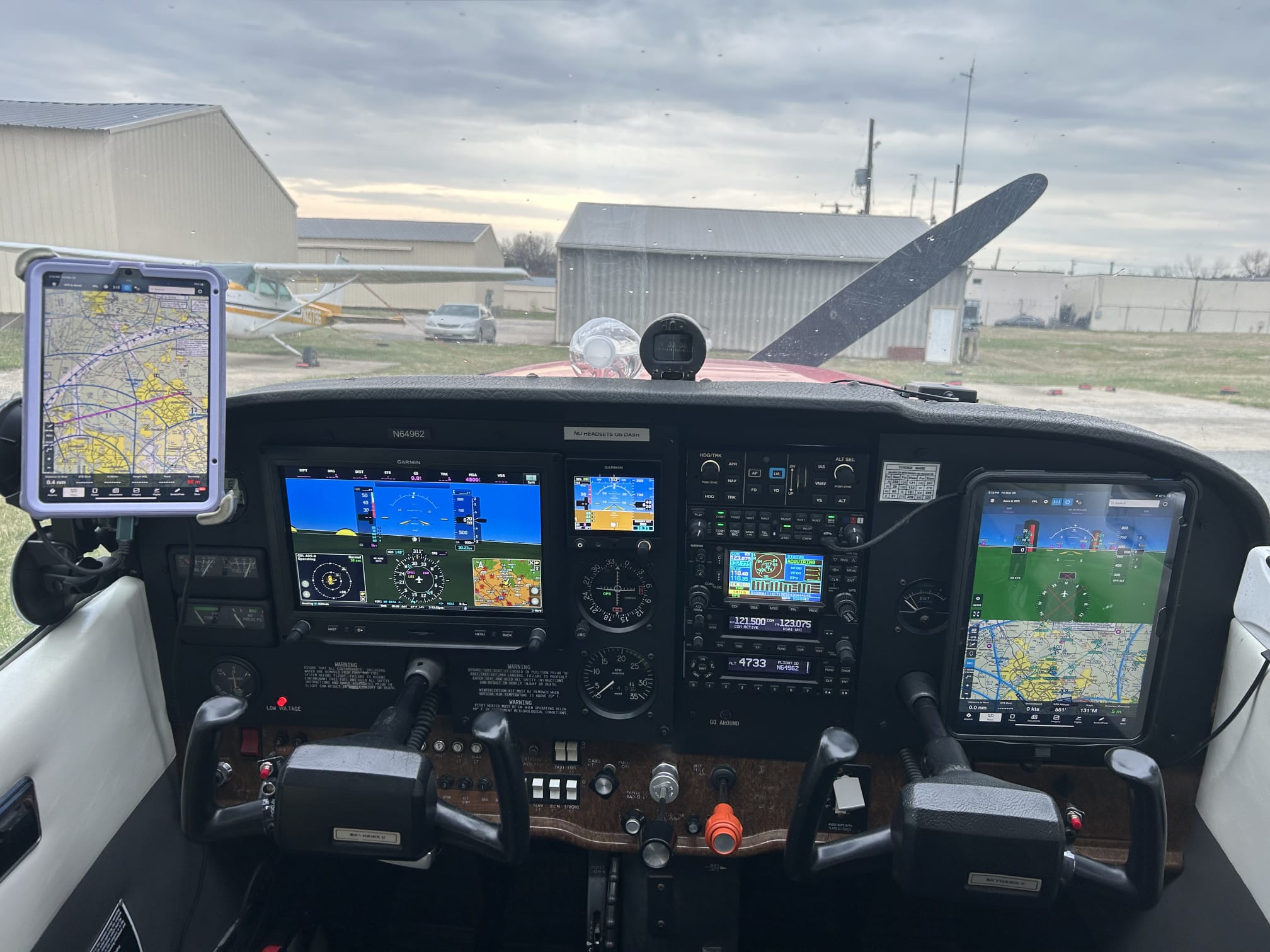
Countrywide Flyers brings club-specific strengths that suit both hobbyists and career starters. Their growing Cessna fleet—centered on Cessna 172 Skyhawk models and high‑utility singles—supports staged training progressions. The club emphasizes glass‑cockpit training with Garmin G1000/G3X avionics in select ships, giving students modern avionics experience early.
The cooperative membership model lowers operating costs through shared ownership and member‑performed tasks where airport rules permit, while certified maintenance partnerships ensure FAA compliance. Clubs commonly provide instruction by member CFIs; roughly 70% of clubs offer primary instruction internally, which aligns with Countrywide Flyers’ mentoring approach.
How to pursue a Private Pilot License via a flying club
- Join Countrywide Flyers and schedule an introductory flight in a Cessna 172 with a club CFI for Orlando flight training orientation.
- Start private pilot training Florida with a Part 61 curriculum and structured lesson plan, progressing to glass‑cockpit lessons if assigned a G1000 aircraft.
- Complete required solo and cross‑country hours, leveraging short XC legs from X04 for practical experience, then sit for the FAA practical test with a DPE.
For cost context, flying clubs often yield about 30% savings (example: $93/hr effective for a Cessna 172 vs. $131/hr rental at typical FBO rates), making Countrywide Flyers a cost‑effective pathway to a private pilot license in Florida.
Frequently Asked Questions
Yes — you can train at many flying clubs such as Countrywide Flyers using member CFIs under FAA Part 61. Clubs provide primary instruction, flexible scheduling, mentorship, and access to aircraft like the Cessna 172. Typical private pilot timelines range from 3–9 months part‑time and 2–4 months accelerated.
Florida costs often favor clubs. Example: Cessna 172 effective club rate ≈ $93/hr versus $131/hr rental, about 20–35% lower. Local Part 61 FBOs list aircraft at $130–$165/hr plus instruction at $50–$65/hr; total zero‑to‑CFI costs vary with hours.
Safety depends on governance. Well‑run clubs keep maintenance logs, allow approved member mechanics or contracted shops, and run safety seminars. Part 141 schools provide structured SMS and stronger FAA oversight. Inspect maintenance records, insurance limits, and seminar schedules before joining.
International flights to the Bahamas require club approval, owner permission, insurance confirmation, and eAPIS/customs filings. Aircraft must have required equipment (ELT, ADS‑B/transponder, adequate survival gear) and pilots should complete overwater training. Some clubs prohibit international ops—confirm Countrywide Flyers’ rules.
To find training, use the AOPA club directory, AOPA Airport/Facility search, or call local FBOs. Ask for a trial checkout, review fleet condition and CFIs, examine membership agreements and insurance limits, and verify recurring safety seminars.
Common Club FAQs
Can I learn to fly at a flying club?
▼
How much does private pilot training in Florida cost with a club vs a flight school?
▼
Are flying clubs safe compared to flight schools?
▼
Can I use club aircraft for international flights like the Bahamas?
▼
How do I find pilot training near me and evaluate a club like Countrywide Flyers?
▼
Conclusion
🎯 Key Takeaways
- → Flying clubs cut training costs ~30% vs. typical rentals—ideal for hobbyists (e.g., Cessna 172 savings)
- → Next step: visit Countrywide Flyers at Orlando Apopka Airport (X04), schedule a discovery flight, or inquire about membership
- → Compare hourly rates, check aircraft availability, and join club events to tap mentorship from member CFIs
Summary
A flying club answers the question what is a flying club by combining shared aircraft ownership, lower hourly rates, and community mentorship. Clubs typically deliver ~30% savings compared with typical rentals, exemplified by Cessna 172 comparisons, and rely heavily on member CFIs rather than the guaranteed staffing model of Part 141 or Part 61 flight schools.
Next steps
If affordability and community appeal are priorities, visit Countrywide Flyers at Orlando Apopka Airport (X04). Schedule a discovery flight, inquire about membership, verify aircraft availability, and compare costs against local Part 61 FBOs or larger academies like ATP.
Compare hourly rates, inspect maintenance rules, and attend an open house. Fly a discovery lesson to feel the club culture before committing.
Call to action
Contact Countrywide Flyers for current rates, booking tools, and maintenance policies; compare with nearby Part 61 schools. Touring facilities and speaking with member CFIs reveals practical differences in scheduling flexibility and long‑term cost savings.