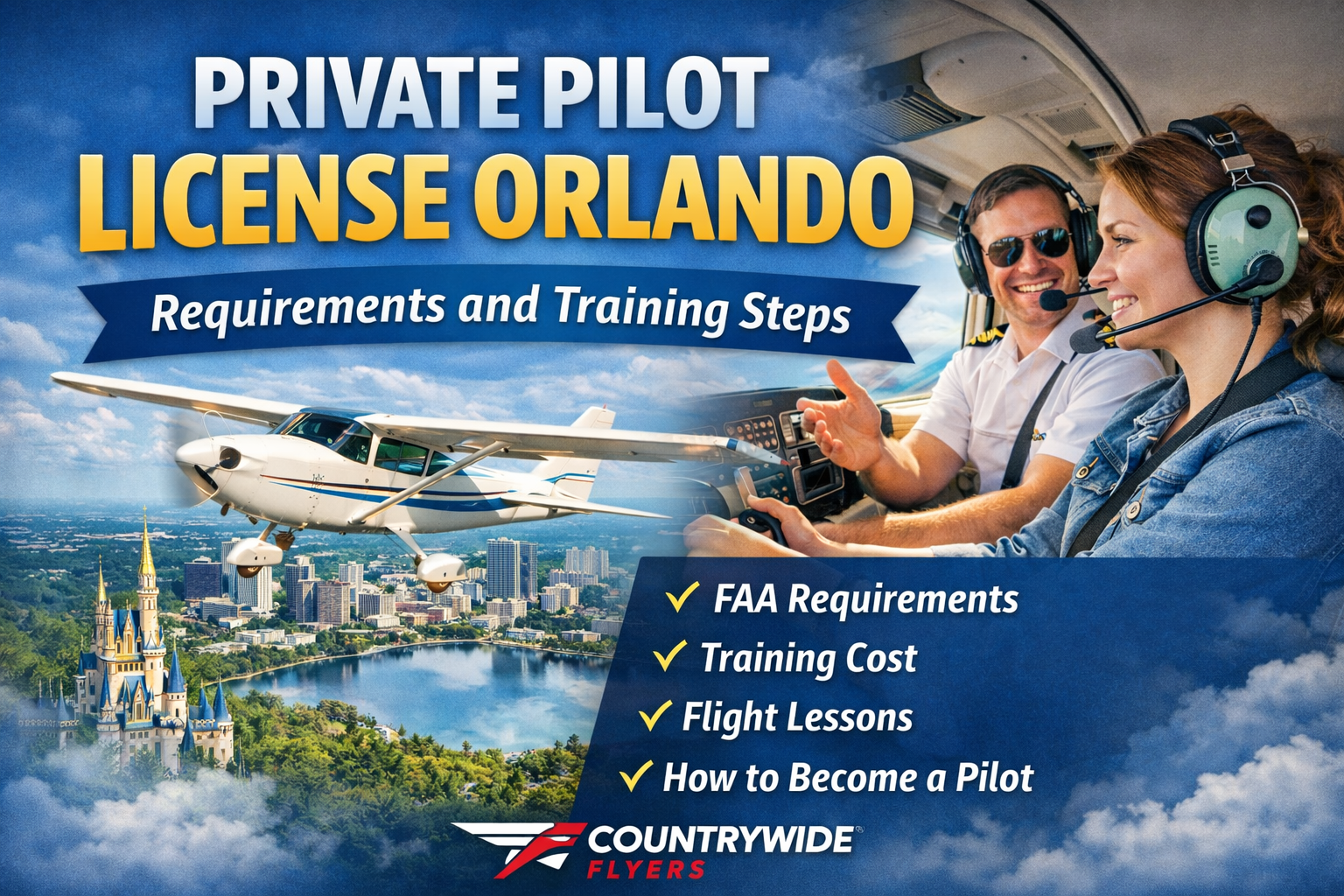
Private Pilot License Orlando: Requirements and Training Steps
If you’ve ever looked up at an airplane crossing the Florida sky and imagined yourself at the controls, you’re not alone. Thousands of people each year decide to learn to fly and pursue their Private Pilot License (PPL) — the first major milestone in becoming a pilot.
For residents of Central Florida, earning a Private Pilot License in Orlando is more accessible than you might think. With excellent flying weather year-round, multiple training airports, and a thriving aviation community, Orlando is one of the best places in the United States to start your aviation journey.
At Countrywide Flyers in Apopka, aspiring pilots have the opportunity to train in modern aircraft with experienced instructors while becoming part of a supportive aviation community.
In this guide, we’ll walk you through everything you need to know about earning your Private Pilot License in Orlando, including:
- FAA requirements
- Training steps
- Cost of flight training
- Timeline to completion
- What to expect during lessons
- How to choose the right training environment
Whether your goal is to fly for fun, travel with family, or eventually pursue a professional aviation career, the Private Pilot License is the foundation that opens the door to the skies.
What Is a Private Pilot License?
A Private Pilot License (PPL) is the first official pilot certification issued by the Federal Aviation Administration (FAA). It allows you to legally operate an aircraft for personal and recreational purposes.
With a Private Pilot License, you can:
- Fly single-engine aircraft
- Carry passengers
- Travel to airports across the country
- Rent aircraft
- Build flight hours toward advanced certifications
Many people pursue a PPL simply because they love aviation and want the freedom to explore the world from above.
Others use the Private Pilot License as the first step toward becoming a commercial pilot or airline pilot.
Why Learn to Fly in Orlando?
Central Florida is widely considered one of the best places in the United States to learn to fly.
Excellent Flying Weather
Florida offers more than 300 days of flyable weather each year, allowing students to train consistently without long weather delays.
Consistent flying means students can progress faster through their training.
Diverse Airspace
The Orlando area provides an excellent mix of aviation environments:
- Towered airports
- Non-towered airports
- Class B, C, and D airspace
- Busy aviation corridors
Training in diverse airspace prepares pilots for real-world flying conditions.
Scenic Flying
Training flights in Central Florida often include incredible views of:
- Downtown Orlando
- Central Florida lakes
- Atlantic coastline
- Natural landscapes
Learning to fly here is both practical and beautiful.
Step 1: Take a Discovery Flight
The first step for most aspiring pilots is taking a Discovery Flight.
A discovery flight is an introductory lesson where you sit in the pilot seat with a Certified Flight Instructor (CFI) and experience flying firsthand.
During the flight you’ll:
- Learn the aircraft controls
- Participate in the preflight inspection
- Take the controls in the air
- Experience real flight training
For many people, this is the moment they realize they truly want to become a pilot.
Step 2: Meet the FAA Requirements
Before beginning training toward a Private Pilot License, the FAA requires students to meet several basic requirements.
To earn a Private Pilot License, you must:
- Be at least 17 years old
- Be able to read, write, and speak English
- Obtain an FAA medical certificate
- Pass a written knowledge test
- Pass a practical flight test (checkride)
These requirements ensure that pilots have the physical ability and knowledge needed to safely operate an aircraft.
Step 3: Obtain an FAA Medical Certificate
All student pilots must obtain an FAA Third Class Medical Certificate before solo flight.
This medical exam is conducted by an FAA-approved Aviation Medical Examiner (AME).
The exam includes:
- Vision test
- Hearing test
- Medical history review
- Basic physical evaluation
For most healthy individuals, obtaining a medical certificate is straightforward.
Step 4: Begin Ground School
Ground school is where students learn the theory and knowledge behind flying.
Topics covered include:
- Aerodynamics
- Aircraft systems
- Weather
- Navigation
- Airspace rules
- FAA regulations
- Radio communication
- Flight planning
Ground school can be completed through:
- Online courses
- Classroom training
- One-on-one instruction
Students must pass the FAA Private Pilot Knowledge Test, a written exam covering these topics.
Step 5: Start Flight Training
Flight training is where students begin developing real piloting skills.
Lessons typically occur 2–3 times per week, allowing students to build skills consistently.
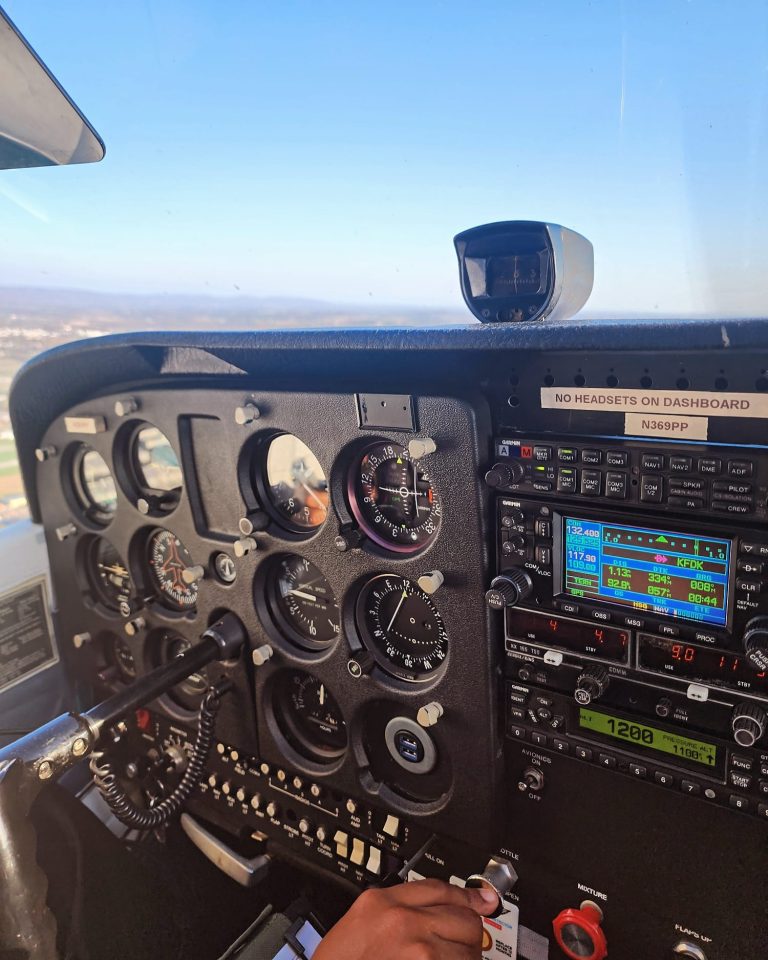
Training takes place in aircraft like the Cessna 172, one of the most widely used training airplanes in the world.
What You Learn During Flight Training
Flight training is divided into multiple phases.
Basic Aircraft Control
Students learn how to:
- Maintain altitude
- Turn the aircraft
- Control speed
- Maintain heading
These skills form the foundation of safe flying.
Takeoffs and Landings
Takeoffs and landings are some of the most important skills pilots must master.
Students practice:
- Normal takeoffs
- Short-field takeoffs
- Crosswind takeoffs
- Soft-field landings
Landing proficiency is essential before students can fly solo.
Solo Flight
One of the most exciting milestones in pilot training is the first solo flight.
After demonstrating safe flying ability, the instructor exits the aircraft and the student flies alone for the first time.
Many pilots describe their first solo as one of the most unforgettable moments of their lives.
Navigation and Cross-Country Flights
Students learn how to navigate between airports using:
- Sectional charts
- GPS
- Pilotage (visual navigation)
- Dead reckoning
Cross-country flights typically include trips of more than 50 nautical miles.
These flights prepare pilots for real-world travel.
Step 6: Log the Required Flight Hours
The FAA requires a minimum of 40 flight hours to earn a Private Pilot License.
However, most students complete training in 55–70 hours.
These hours include:
Dual Instruction
Flights with a certified instructor.
Solo Flight
Flights where the student pilot flies alone.
Cross-Country Time
Flights between airports.
Night Flying
Required training includes night flight experience.
Step 7: Pass the FAA Knowledge Test
Before taking the final flight test, students must pass the FAA Private Pilot Knowledge Exam.
The exam includes 60 multiple choice questions covering topics such as:
- Weather
- Regulations
- Navigation
- Aircraft performance
- Airspace rules
A passing score is 70% or higher.
Step 8: Take the Checkride
The final step to earning your Private Pilot License in Orlando is passing the checkride.
A checkride consists of two parts:
Oral Exam
The examiner asks questions about:
- Regulations
- Weather interpretation
- Flight planning
- Aircraft systems
Flight Test
You’ll demonstrate:
- Takeoffs and landings
- Navigation skills
- Emergency procedures
- Aircraft control
If you pass the checkride, you officially become a FAA Certified Private Pilot.
How Long Does It Take to Earn a Private Pilot License?
Training timelines vary depending on schedule and dedication.
Typical timelines:
Accelerated Training
2–3 months
Average Training Schedule
4–6 months
Casual Training
6–12 months
Students who fly frequently progress much faster.
How Much Does It Cost to Get a Private Pilot License in Orlando?
The cost of earning a Private Pilot License depends on several factors.
Typical costs include:
Aircraft rental
Flight instructor time
Ground training
Books and supplies
FAA testing fees
In the Orlando area, most students spend between:
$12,000 – $18,000
Training efficiently and flying regularly helps reduce overall cost.
What Aircraft Are Used for Flight Training?
Most flight schools train students in aircraft known for reliability and stability.
Common training aircraft include:
- Cessna 172
- Piper Warrior
- Piper Archer
The Cessna 172 is particularly popular because it is:
- Stable
- Easy to fly
- Reliable
- Widely used in training
Benefits of Becoming a Private Pilot
Earning a Private Pilot License opens the door to a lifetime of opportunities.
Pilots can:
- Travel faster than driving
- Visit remote destinations
- Experience incredible aerial views
- Build aviation skills
- Pursue advanced ratings
For many pilots, flying becomes a lifelong passion.
Advanced Training After Your PPL
Once you earn your Private Pilot License, you can pursue additional ratings.
These include:
Instrument Rating
Allows pilots to fly in clouds and poor weather conditions.
Commercial Pilot License
Allows pilots to be paid for flying.
Flight Instructor Certification
Allows pilots to teach others how to fly.
Multi-Engine Rating
Allows pilots to fly aircraft with multiple engines.
These certifications build toward professional aviation careers.
Why Choose Countrywide Flyers for Flight Training
If you’re considering earning your Private Pilot License in Orlando, Countrywide Flyers offers a unique training environment.
Our flying club provides:
- Modern training aircraft
- Experienced instructors
- A supportive aviation community
- Flexible scheduling
- Competitive rental rates
Unlike traditional flight schools, Countrywide Flyers is designed as a community of aviation enthusiasts who share a passion for flying.
Students train in a welcoming environment where they can grow their skills and build lasting aviation friendships.
Start Your Pilot Journey Today
Becoming a pilot is one of the most rewarding achievements a person can pursue.
The journey begins with curiosity, excitement, and the decision to take that first step toward the sky.
For many people in Central Florida, that first step begins at Countrywide Flyers in Apopka.
If you’ve ever dreamed about flying, now is the perfect time to begin.
Take a Discovery Flight, experience the thrill of aviation, and start working toward your Private Pilot License in Orlando.
The sky is waiting.
Book Your Discovery Flight
Ready to start your aviation journey?
Visit:
to schedule your Discovery Flight and begin learning to fly today.