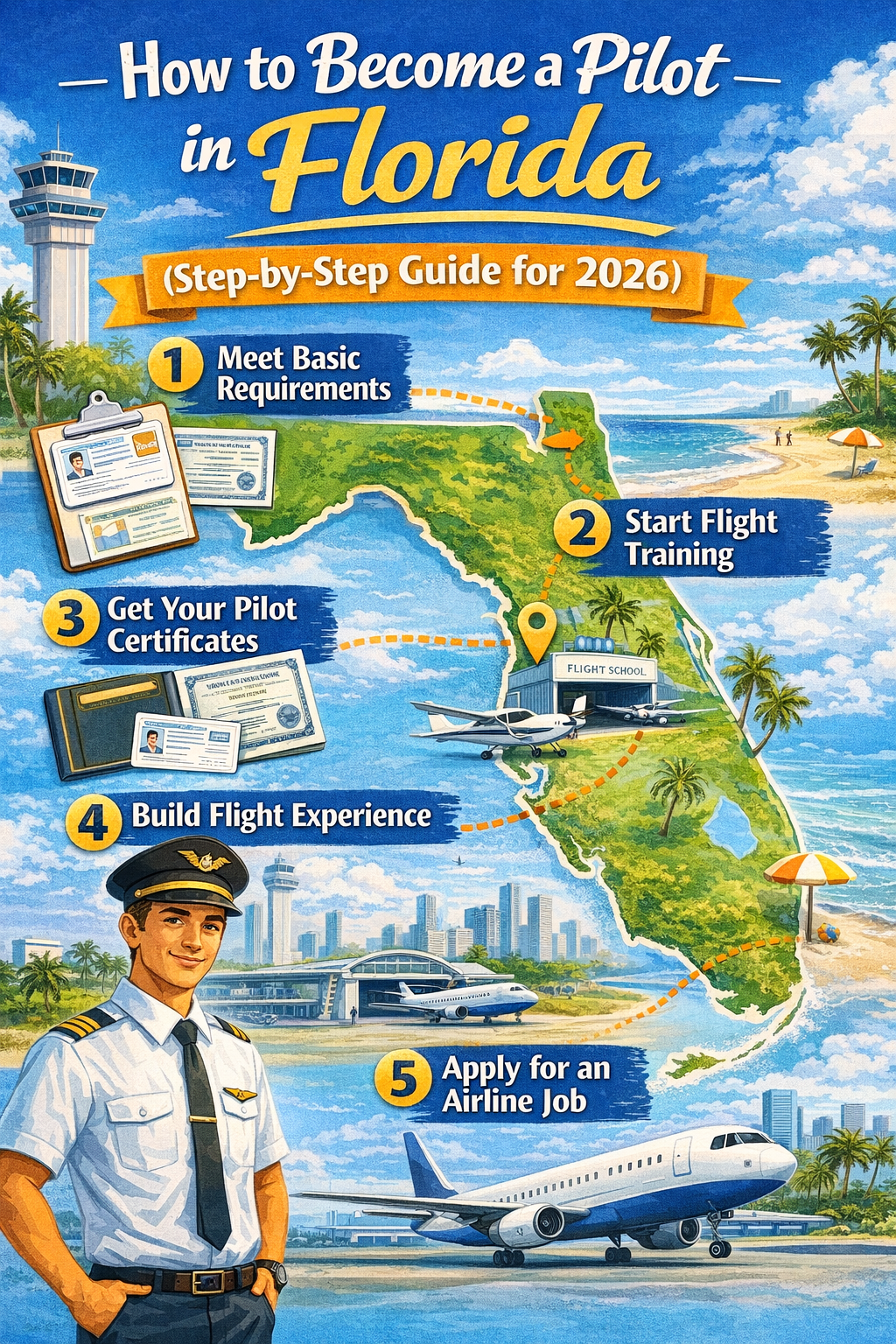
How to Become a Pilot in Florida (Step-by-Step Guide for 2026)
The Ultimate Step-By-Step Guide to Earning Your Wings
Have you ever looked up at the sky and wondered, “What does it take to fly an airplane?” Or “How do I become a professional pilot in Florida?” If you’re ready to begin the journey of earning your wings, you’ve come to the right place.
Becoming a pilot is one of the most rewarding—and structured—paths you can choose. Florida is one of the best states in the U.S. for flight training, and today’s aviation career environment offers exciting opportunities for students, career changers, time-builders, and hobbyists alike.
In this complete 2025 guide, we’ll walk through every step to become a pilot in Florida—from your first discovery flight to earning advanced certifications and building a career in aviation.
Why Train in Florida?
Florida is one of the top states in the country for pilot training, and there are several reasons why:
- Year-round flying weather — more sunny days mean fewer cancellations.
- Diverse airspace — from small general aviation fields to busy Class B airspace.
- Strong aviation infrastructure — numerous airports, flight schools, and FBOs.
- High demand for pilots — airlines and corporate operators are hiring.
Flying in Florida gives you consistent practice and real-world experience you won’t find in many other states.
Step 1: Understand the Types of Pilot Certificates
Before you begin, you should know the major pilot certificates you can earn.
1. Student Pilot Certificate
This is the first certificate you’ll need before you can fly solo. You must be at least 16 years old to fly solo in an airplane and demonstrate basic proficiency with an instructor.
2. Private Pilot License (PPL)
This is your first full license. It allows you to fly for pleasure or personal travel, carry passengers, and access more airspace.
3. Instrument Rating (IR)
This rating lets you fly in conditions where you must rely on instruments rather than visual cues. It’s essential for career pilots and adds depth to your training.
4. Commercial Pilot Certificate
This is your professional license that allows you to be paid for flying.
5. Certified Flight Instructor (CFI)
Becoming an instructor lets you build flight hours while teaching others.
6. Airline Transport Pilot (ATP)
The highest level of pilot certification, typically required for airline pilots.
Step 2: Meet Basic Eligibility Requirements
Before you start flight training, you must meet some FAA requirements:
✔ Age Requirements
- 16 years old — eligible for a student pilot certificate.
- 17 years old — eligible for a private pilot certificate.
- 18 years old — eligible for a commercial pilot certificate.
✔ English Language Proficiency
You must be able to speak, read, write, and understand English.
✔ FAA Medical Certificate
You must pass an aviation medical exam with an FAA-authorized Aviation Medical Examiner (AME). The minimum is a 3rd Class medical for private pilots, with stricter classes required for higher certifications.
Step 3: Find a Flight School or Flight Training Program
Once you understand the requirements, the first big step is choosing where to train.
There are two main types of FAA-regulated flight training programs:
✈️ Part 61 Flight Training
- More flexible schedule
- Training tailored to your pace
- Often found with smaller flight instructors and clubs
✈️ Part 141 Flight Training
- Structured FAA-approved curriculum
- Recommended for accelerated, career-track students
- Lower minimum flight time required for certain certificates
Both pathways lead to the same certificates — the difference is in structure and training expectations.
Step 4: Take an Introductory (Discovery) Flight
Your first flight is often called a discovery flight.
This is your first chance to:
- Sit in the pilot’s seat
- Control an aircraft under instructor supervision
- Experience real flight maneuvers
It’s a great way to confirm your passion for aviation and see firsthand what flight training feels like.
Step 5: Start Ground School
While you’re completing flight lessons, you’ll also begin ground school — classroom or online study that prepares you for:
- Aerodynamics
- Weather and weather forecasting
- Navigation
- Aircraft systems
- FAA regulations
Preparation here is essential for your FAA written examinations.
Step 6: Complete Flight Training
📍 Private Pilot Training
To earn your Private Pilot License:
- FAA minimum: 40 flight hours under Part 61
- Most students average 50–70 hours to reach proficiency
Your training includes:
- Basic maneuvering
- Pattern work
- Navigation and cross-country flights
- Emergency procedures
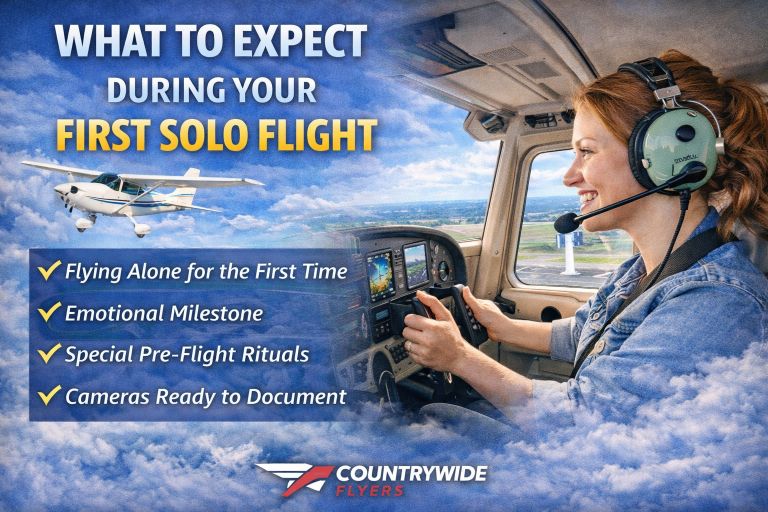
- Solo flights
Step 7: Pass the FAA Knowledge Test
Once your instructor endorses you, you’ll take the FAA knowledge (written) test.
This computer-based exam covers:
- Aerodynamics
- Airspace rules
- Regulations
- Weather
- Navigation
You must score at least 70% or better to pass.
Step 8: Pass Your Checkride (Practical Test)
The final step is the FAA practical test — also called a checkride.
It consists of:
- An oral exam
- A flight portion with a designated pilot examiner (DPE)
Passing this test earns you your pilot certificate — a major aviation milestone.
Step 9: Earn Additional Ratings
Once you have your Private Pilot License, you can pursue:
🎯 Instrument Rating (IR)
Enhances safety and gives you the ability to fly in low visibility.
🎯 Commercial Pilot Certificate
Allows you to fly commercially. FAA requires at least 250 flight hours for Commercial certification.
🎯 Multi-Engine Rating
Enables you to fly aircraft with more than one engine — valuable for advanced careers.
🎯 Certified Flight Instructor (CFI)
CFI lets you build flight hours professionally while teaching new pilots.
Step 10: Build Flight Hours
Career pilots must log hours beyond certification minimums. To serve in an airline cockpit, FAA requires at least 1,500 total flight hours for an ATP certificate — though restricted ATP programs and airline partnerships may reduce this requirement.
Time building can include:
- Flying as a CFI
- Cross-country flights
- Flight reviews for proficiency
Step 11: Understanding the Costs
Becoming a pilot is an investment. Costs vary widely based on:
- Training pace
- Aircraft rental rates
- Instruction hours
- Program structure (Part 61 vs Part 141)
Typical ranges (private → commercial) can range from tens of thousands to over $100,000 on a full career path. Consistent scheduling and training helps reduce overall cost.
Step 12: Career Options After Training
Once you’ve earned your certifications and built flight time, career pathways include:
✈️ Airline Pilot
Requires ATP and significant flight hours.
✈️ Corporate Pilot
Fly executives and private charters.
✈️ Cargo Pilot
Fly freight across regions.
✈️ Flight Instructor
Teach others while building hours.
Why Florida Is Ideal for Pilot Training
Florida offers:
✔ Favorable weather nearly year-round
✔ Busy airspace providing real training
✔ Multiple airports for cross-country experience
✔ Strong aviation community
Training here gives you solid experience you can’t get in colder climates.
Finding the Right Flight Training Partner
Choosing a flight training partner is one of the most important decisions:
✔ Qualified instructors
✔ Structured curriculum
✔ Access to aircraft
✔ Supportive environment
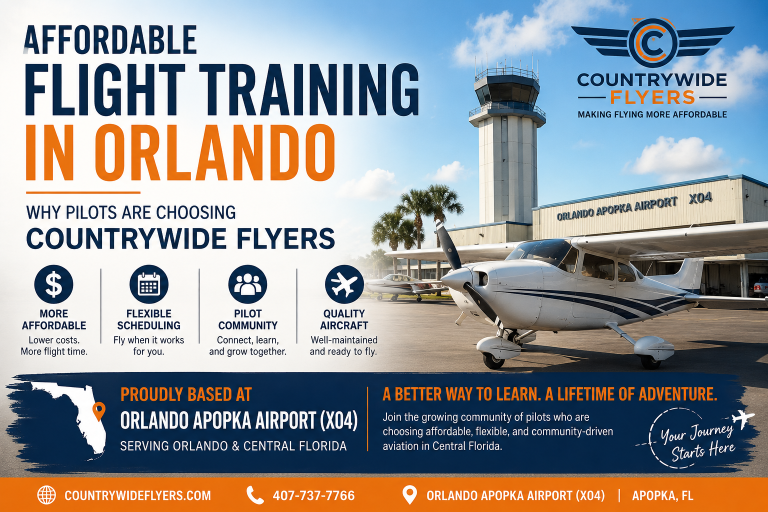
If you’re training near Orlando, flying from Orlando-Apopka Airport (X04) offers:
- Less congestion than major airline airports
- Access to complex airspace
- Central Florida flight training opportunities
Final Tips for Aspiring Pilots
🧠 Study Consistently
Regular ground study helps with FAA tests.
✈️ Fly Regularly
Consistency improves skill retention.
🤝 Ask Questions
Never hesitate to ask your instructor.
📅 Plan a Schedule
Frequent repeat lessons keep progress steady.
Conclusion
Becoming a pilot in Florida in 2026 is an exciting journey that blends passion, discipline, planning, and training. From your first discovery flight to achieving an ATP and beyond, Florida offers a vibrant aviation environment rich with opportunities.
Whether you’re learning for fun or training for a career, following these steps sets you on the right path.
Book Your Discovery Flight Today! Check the Weather Here!